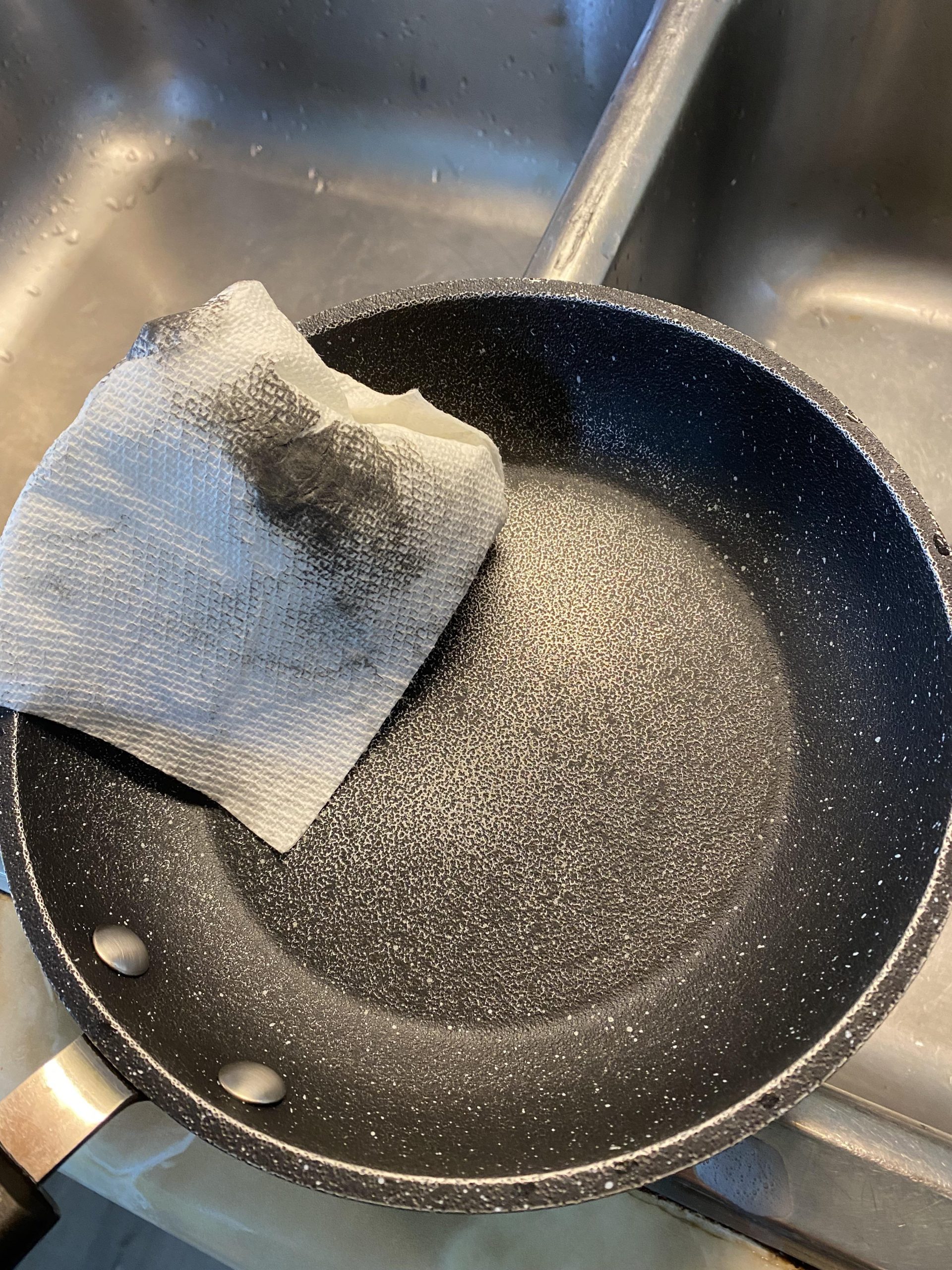
Gently scrub with baking soda paste and warm water, then rinse and repeat as needed.
I have cleaned dozens of pans in home kitchens and rental apartments. I know how to remove black residue from nonstick pans without harming the coating. This guide shows safe steps, clear tools, and simple tips. Read on to fix stained pans and keep them nonstick for longer.
 display: block; margin: 0 auto;”
loading=”lazy”
/>
Why black residue forms on nonstick pans
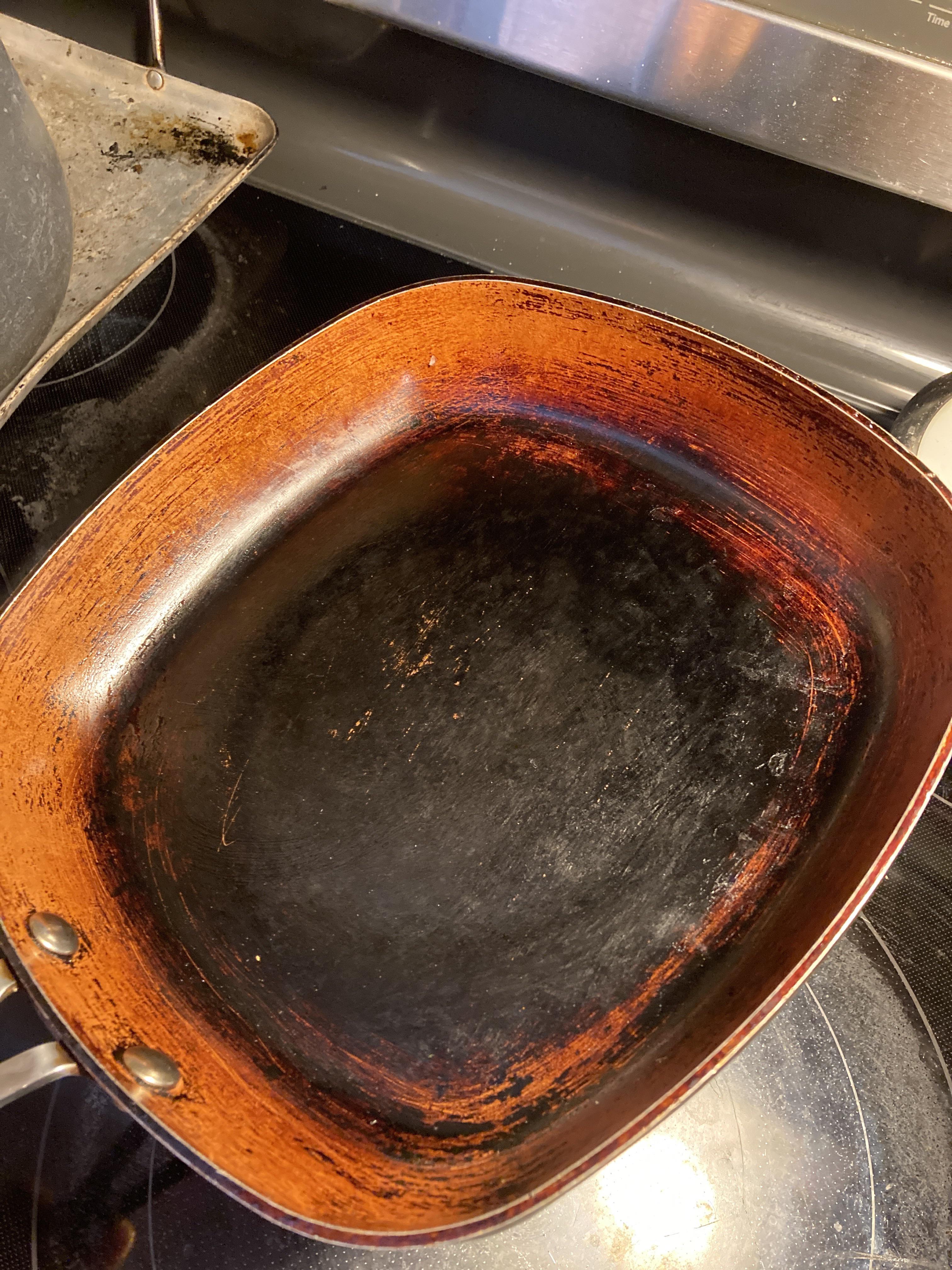
Black residue on nonstick pans is common. It comes from burnt oil, food bits, and degraded cooking spray. High heat and metal utensils speed wear. Knowing the cause helps you know how to remove black residue from nonstick pans safely.
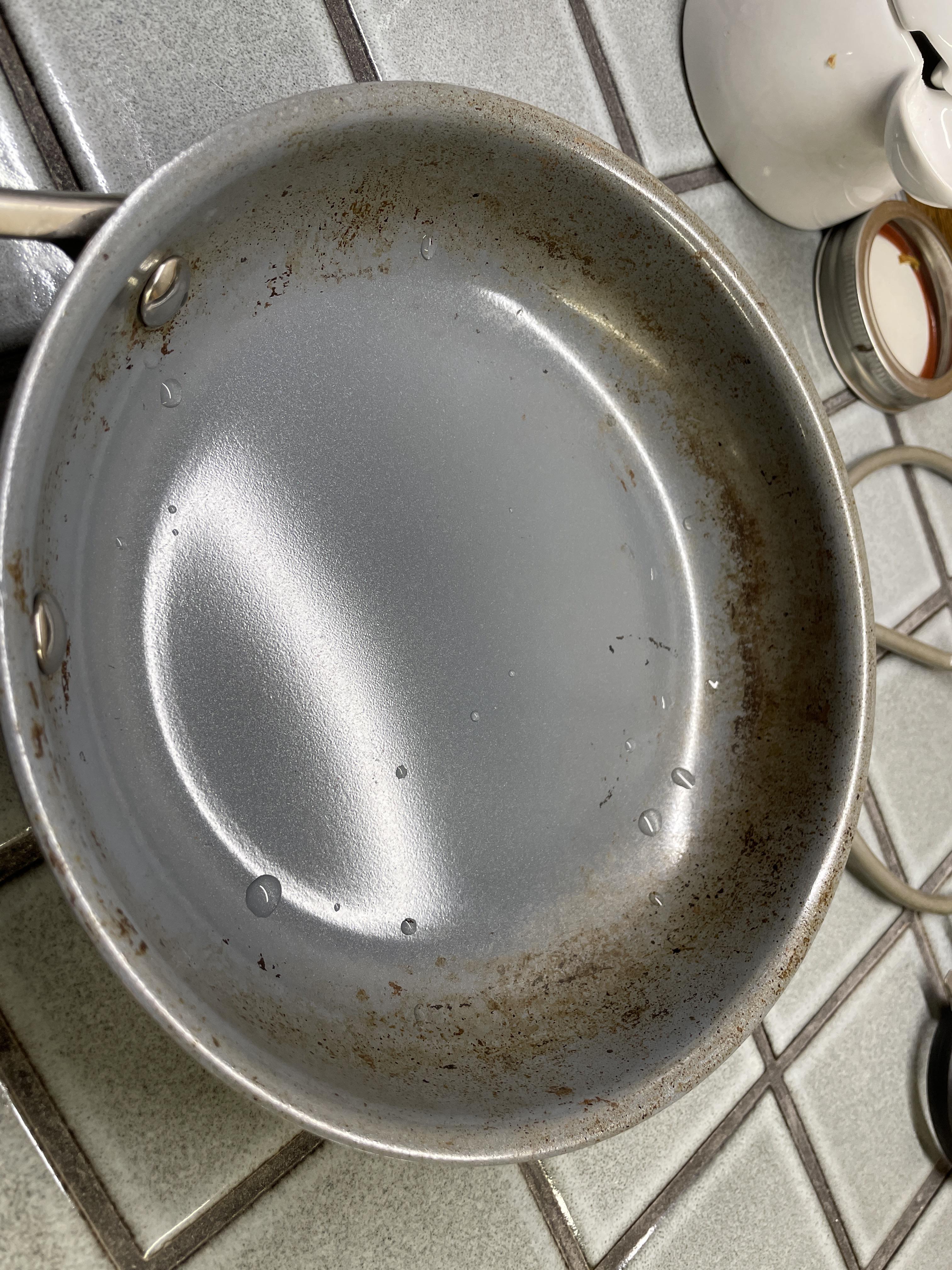
Safety first: check your pan and health risks
Some old pans can flake or shed coating. If the surface peels, stop trying to clean it. Experts say do not use harsh chemicals on damaged coatings. Always work in a well-ventilated area and wear gloves if you use cleaners.
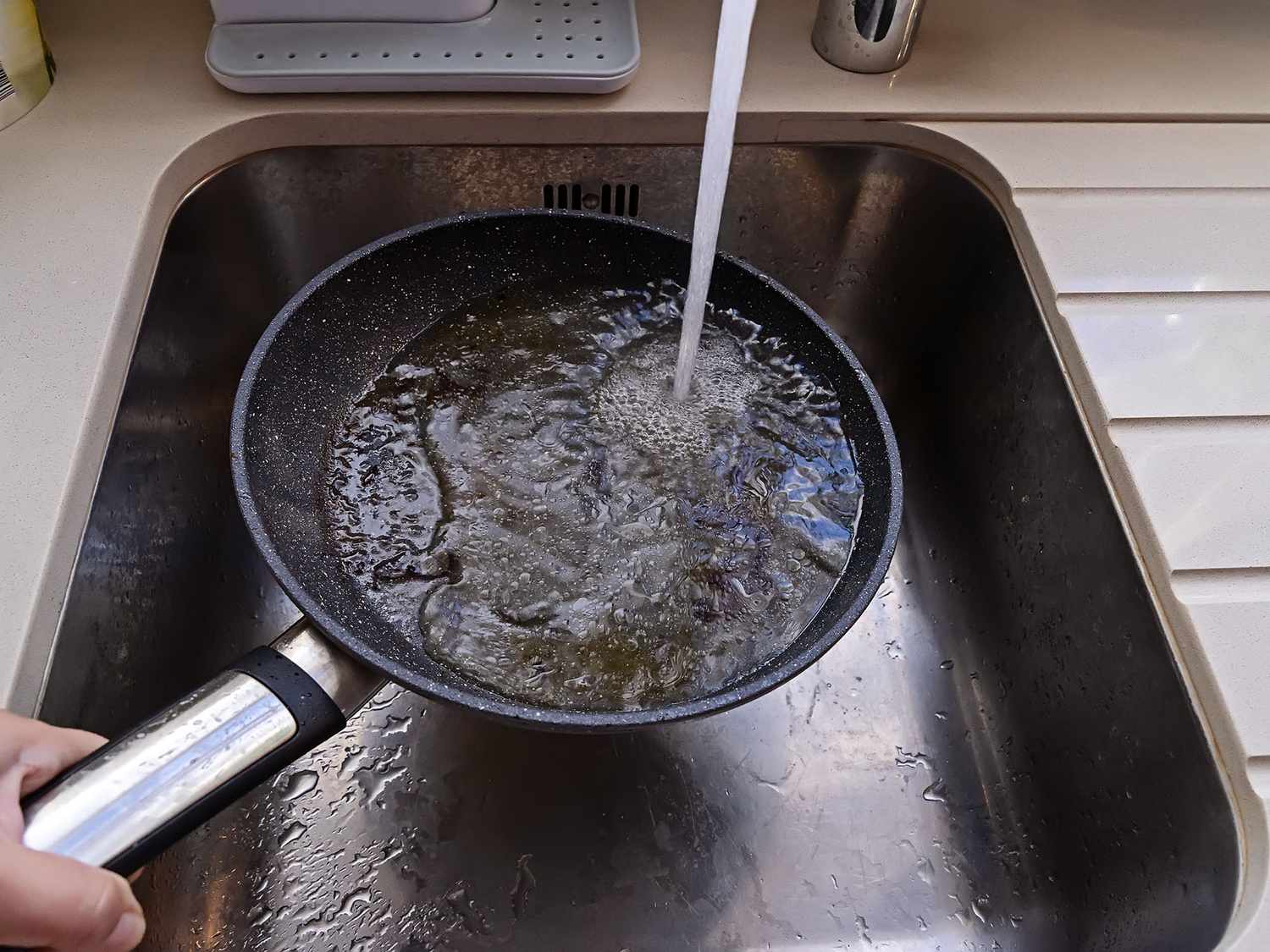
Quick, gentle cleaning methods
Try these mild first steps before stronger methods. These keep the nonstick finish safe.
Dish soap and warm water
- Fill pan with warm water and a few drops of dish soap.
- Let soak 10–20 minutes.
- Use a soft sponge to wipe residue away.
- Rinse and dry.
Baking soda paste
- Mix 2 parts baking soda with 1 part water to make a paste.
- Spread paste on black residue.
- Let sit 10–15 minutes.
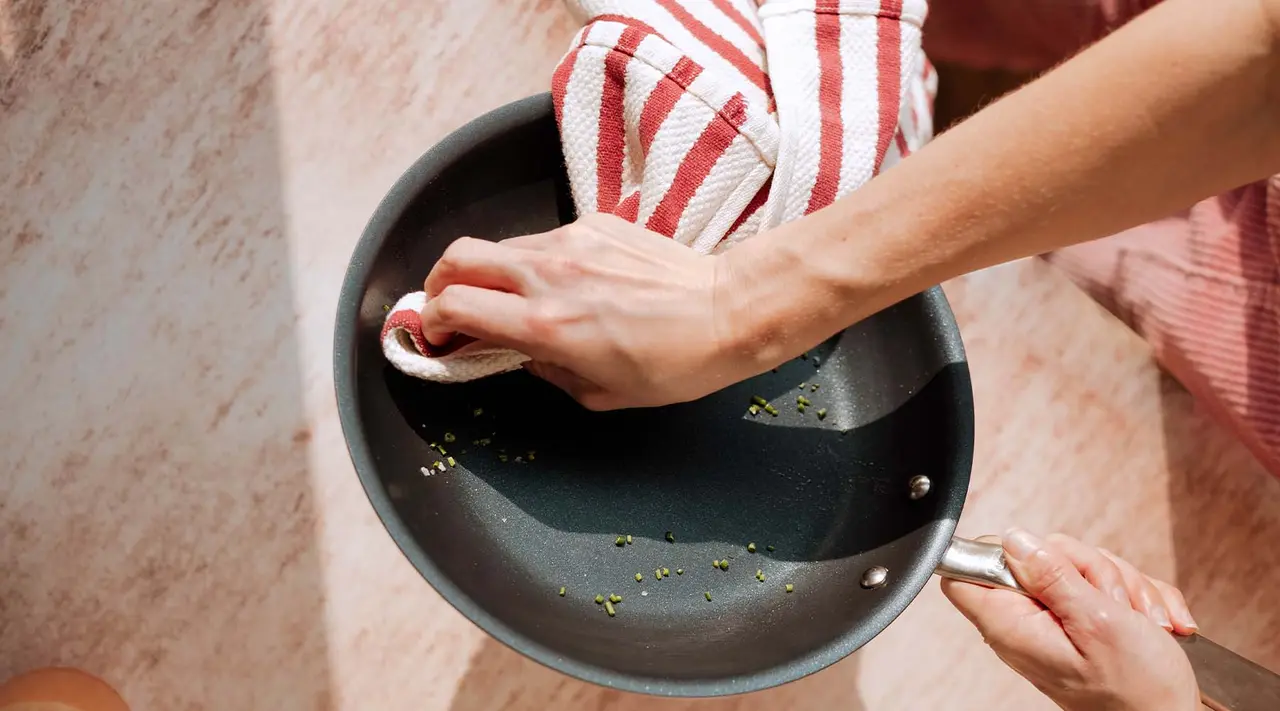
- Use a soft cloth or nylon pad to rub gently.
- Rinse well.
Boiling water method
- Fill the pan with water to cover the residue.
- Bring to a gentle boil for 5–10 minutes.
- Let cool then wipe with a sponge.
- Repeat if needed.
These steps show how to remove black residue from nonstick pans with safe items you likely have at home.
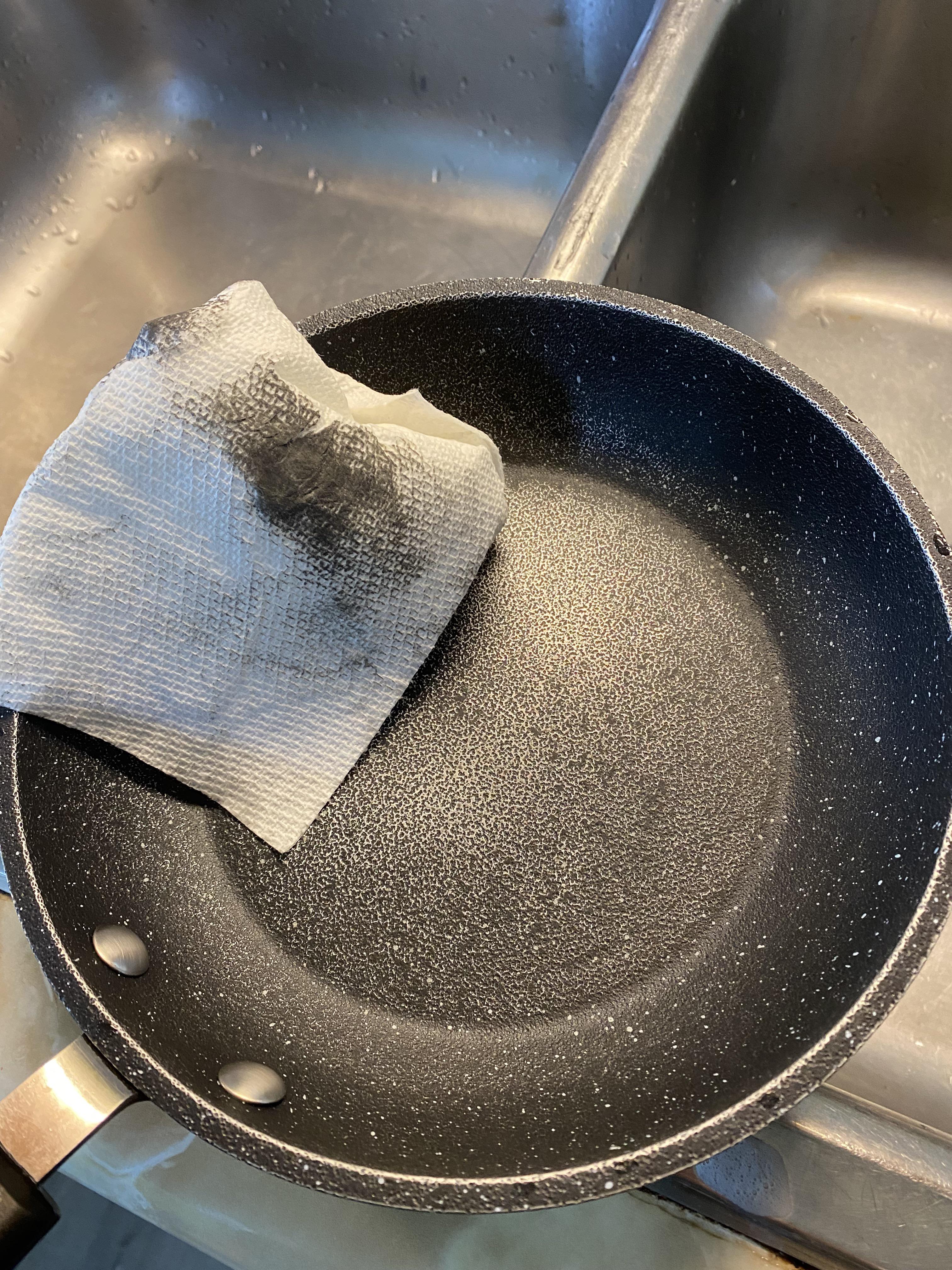
Deep cleaning for stubborn black residue
Some stains need deeper work. Use stronger but safe combos first. Avoid metal scrubbers and oven cleaners on most nonstick pans.
Vinegar soak and baking soda scrub
- Fill pan with equal parts water and white vinegar.
- Heat to a simmer for 5 minutes.
- Turn off heat and add a tablespoon of baking soda.
- Let fizz and cool, then scrub gently.
Repeat baking soda paste with longer soak
- Apply a thick paste of baking soda and water.
- Let sit overnight.
- Scrub with a nylon pad in circular motions.
- Rinse and dry.
Use a nonabrasive cleaner
- Choose a mild powdered cleaner labeled safe for nonstick.
- Make a paste with water.
- Rub gently with a soft cloth.
- Rinse thoroughly.
If deep cleaning does not remove the black residue, test a small area first. If the coating shows damage or grey streaks remain, consider replacing the pan.
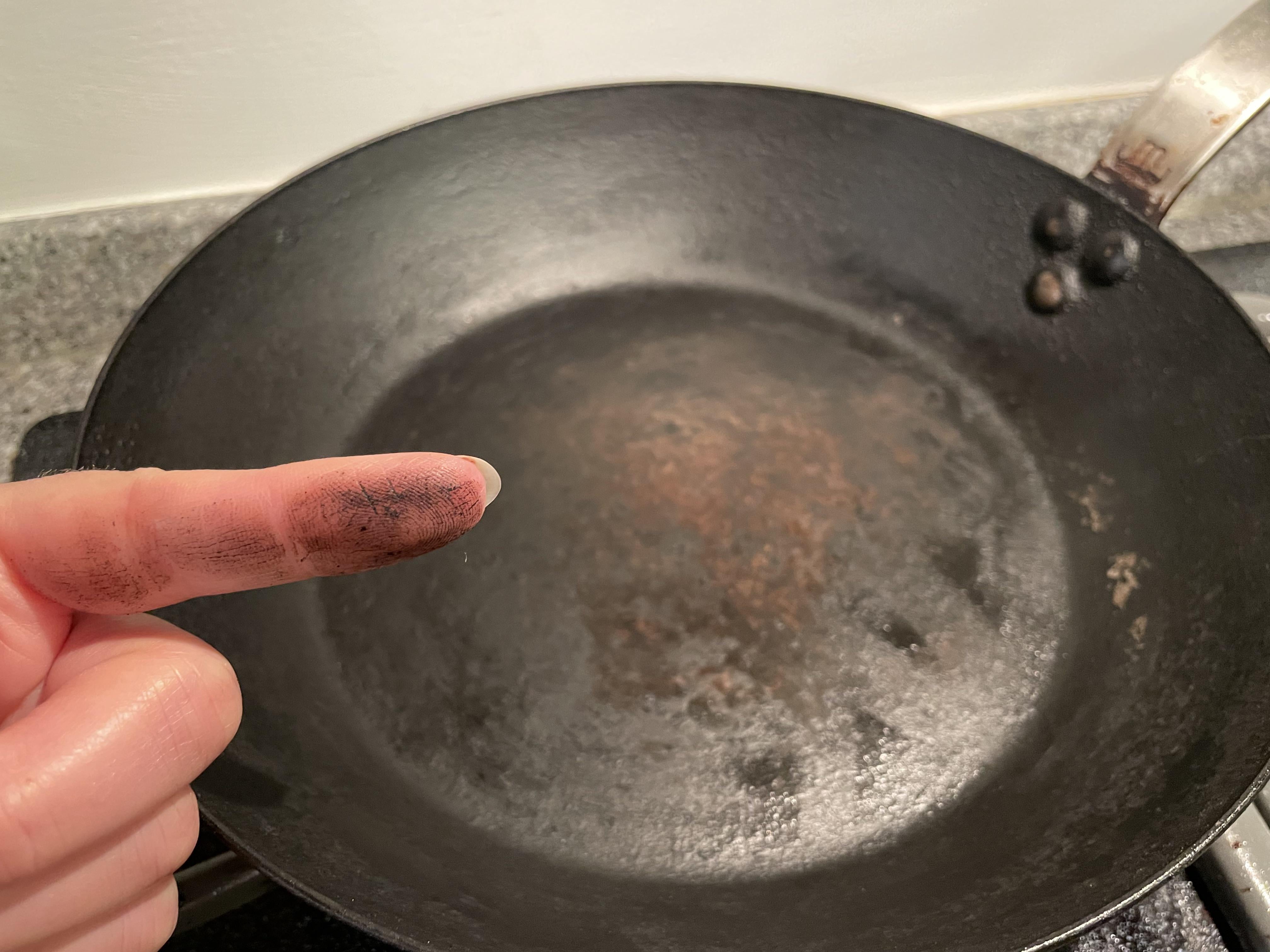
Home remedies and natural solutions
You can fix many pans with simple kitchen items. These are low cost and low risk.
Salt and lemon
- Sprinkle coarse salt on the pan.
- Rub with half a lemon to lift light stains.
- Rinse and dry.
Cream of tartar paste
- Mix cream of tartar and water into a paste.
- Apply to the residue and wait 30 minutes.
- Wipe off gently.
Cornstarch for greasy buildup
- Sprinkle cornstarch to absorb oils.
- Wipe away with a paper towel.
- Wash with warm, soapy water.
These tips show how to remove black residue from nonstick pans using safe, natural items.
Tools to use and tools to avoid
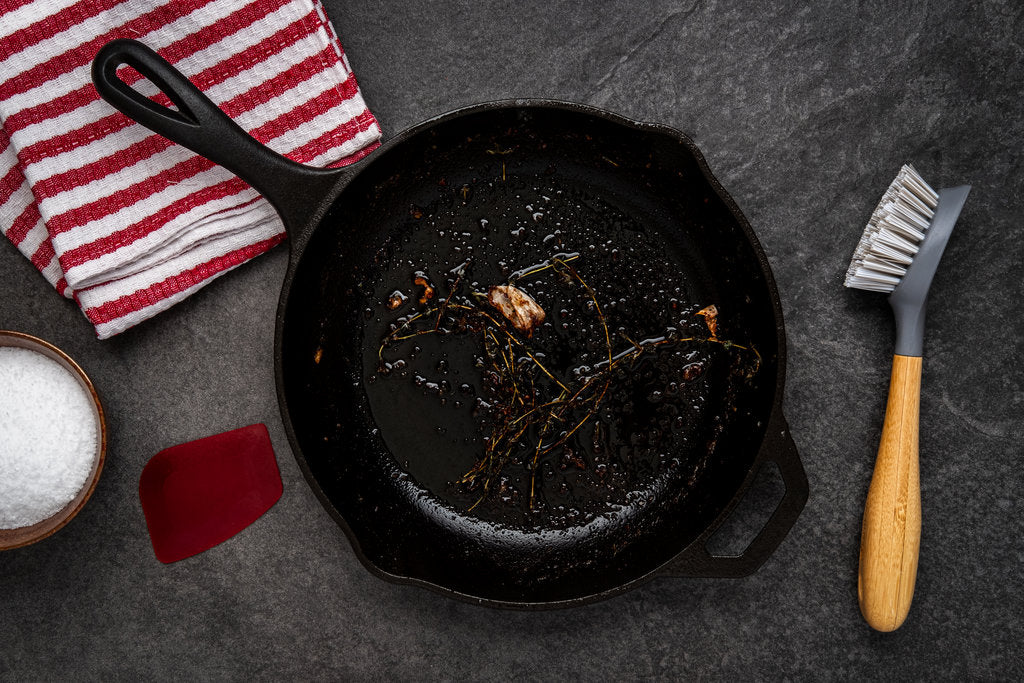
Using the right tool makes cleaning safe and fast.
Use these:
- Soft sponge or cloth
- Nylon scrubbing pad
- Wooden or silicone spatula for scraping
- Plastic scraper made for cookware
Avoid these:
- Steel wool or metal scouring pads
- Abrasive powders not labeled for nonstick
- Metal utensils that scratch the surface
- Oven cleaner unless pan instructions allow it
Knowing what to avoid helps you protect the coating while you remove black residue from nonstick pans.
Maintenance and prevention tips
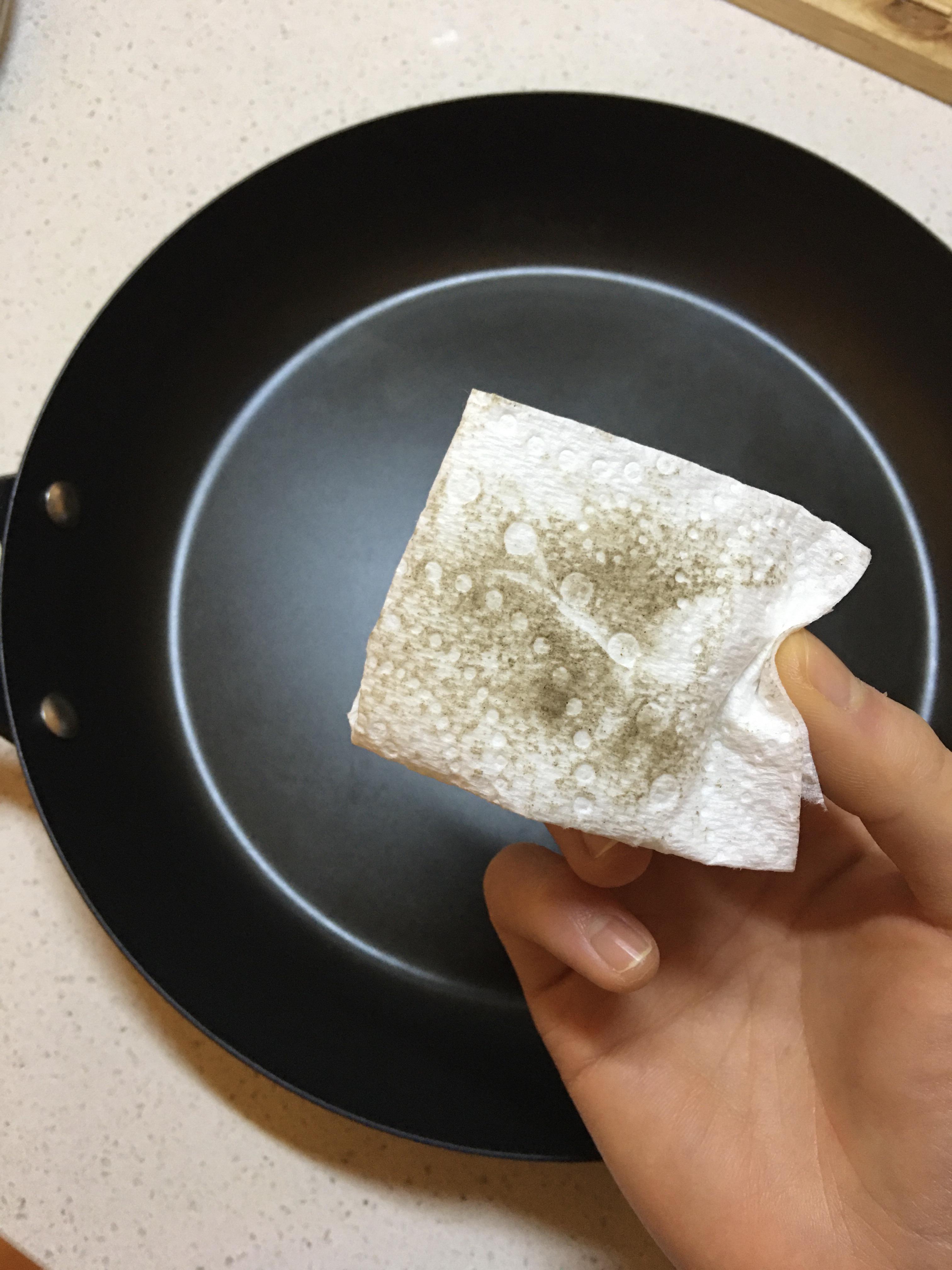
Good care stops black residue from building up.
- Cook on low to medium heat when possible.
- Use minimal oil and avoid aerosol sprays.
- Clean the pan soon after use.
- Store pans with soft liners or hang them.
- Use silicone, wood, or nylon utensils only.
If you follow these steps, you will reduce the need to deep clean and you will extend the pan life.
When to replace your nonstick pan
Cleaning can fix many stains. You still need to know when to replace a pan.
Signs to replace:
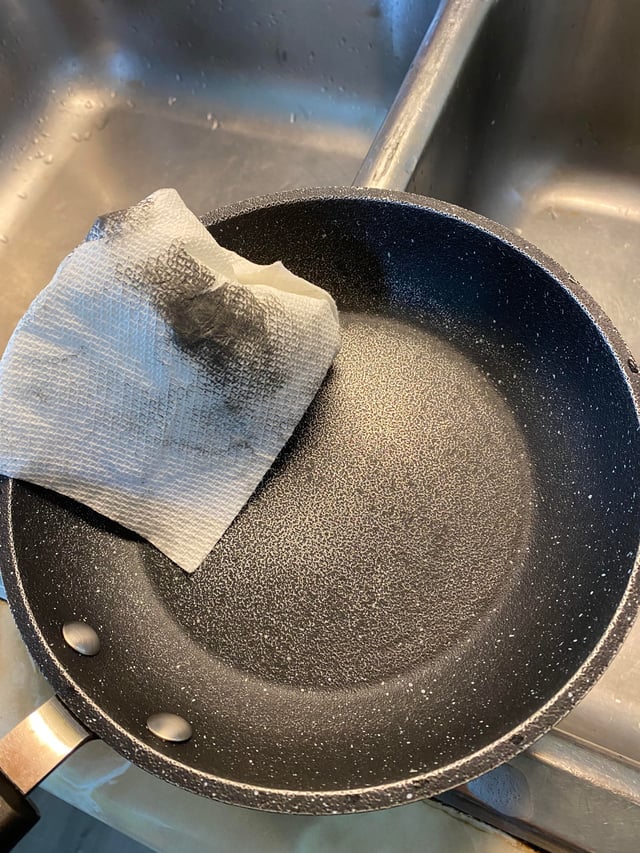
- Flaking or chipping coating
- Large scratches that expose metal
- Persistent taste or smell you cannot remove
- Warping or a loose handle
If replacement is needed, recycle the old pan if your local program accepts it. Safety comes first when you try to remove black residue from nonstick pans.
People also ask
Can I use baking soda on all nonstick pans?
Yes. Baking soda is mild and safe for most nonstick coatings. Use it as a paste and scrub gently.
Will vinegar damage my nonstick pan?
No, short vinegar soaks are safe. Do not leave acid to sit for days on the surface.
Is it safe to use metal utensils after cleaning?
No. Metal utensils can scratch the coating and cause future flaking.
Frequently Asked Questions of how to remove black residue from nonstick pans
How long should I let baking soda paste sit on a pan?
Let the paste sit 10–30 minutes depending on the stain. Stronger stains may need an overnight rest for best results.
Can I use oven cleaner to strip black residue?
Avoid oven cleaner on most nonstick pans. The chemicals can damage the coating and create health risks.
Will scrubbing harder remove the residue faster?
Not always. Hard scrubbing can scratch the surface and make the problem worse. Use gentle pressure and repeat as needed.
Is it safe to use bleach on nonstick cookware?
No. Bleach can be too harsh and may harm the coating. Stick to mild cleaners and natural solutions.
How often should I deep clean a nonstick pan?
Deep clean only when residue builds up. Regular mild cleaning after each use keeps pans in good shape.
Conclusion
You can remove black residue from nonstick pans with safe steps. Start with warm soapy water, then use baking soda paste or a vinegar soak for tougher spots. Use only soft tools and watch for flaking. From my own kitchen tests, small, regular cleanings beat harsh fixes. Try these tips this week and see how your pan improves. If this helped, share your results or ask a question below.