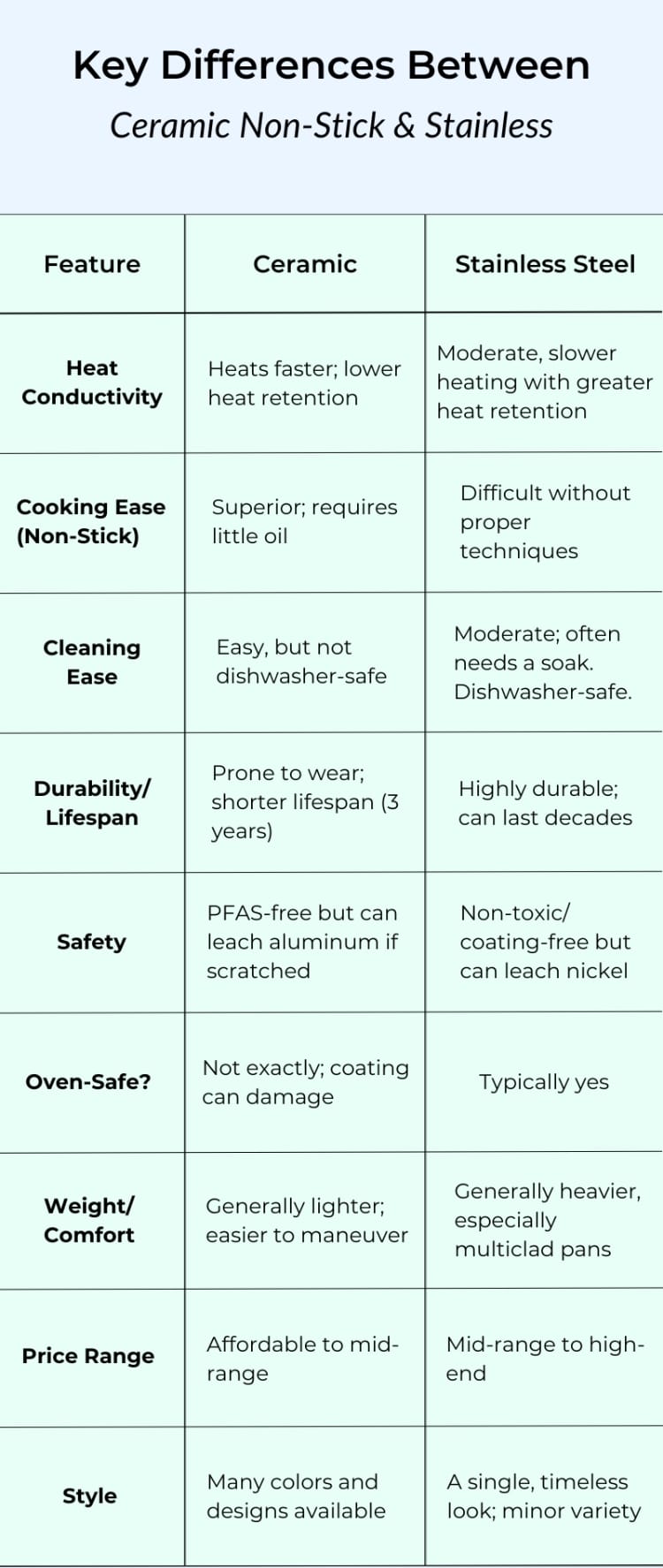
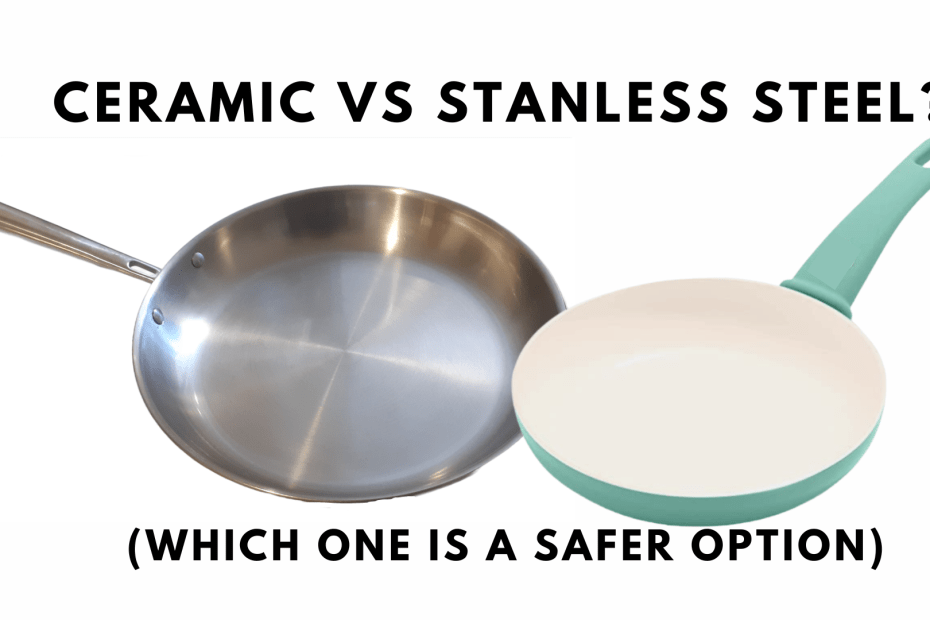
Ceramic and stainless steel cookware are both safe when used correctly; risks are minimal with care.
I have tested pans in home kitchens and taught safety classes for years. This guide on ceramic vs stainless steel cookware safety breaks down how each type is made, where risks really lie, and how to pick and use pans the smart way. Read on for clear, practical advice you can trust to keep your food safe and your kitchen calm.
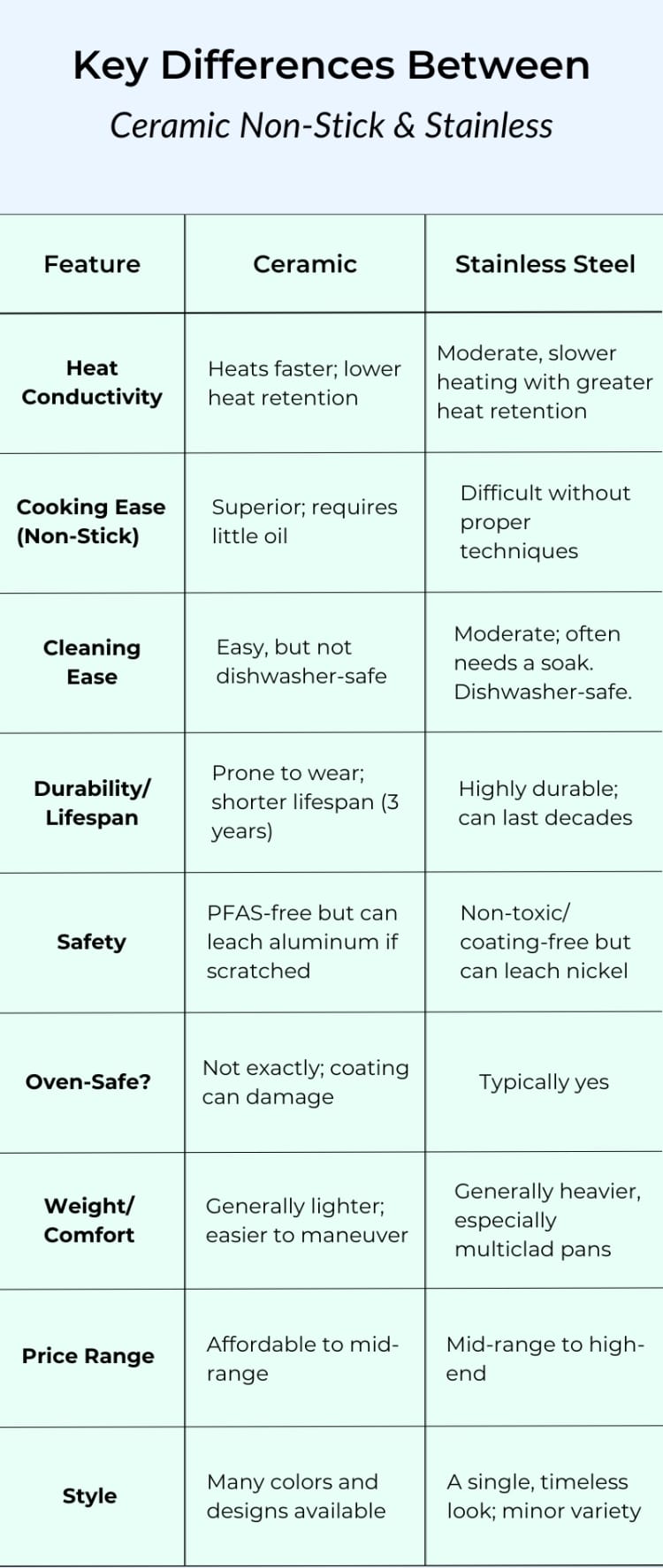
How ceramic and stainless steel cookware are made
Ceramic-coated pans start with a metal base. The base is usually aluminum or another metal. A ceramic or silica-based coating is applied over the metal. The coating may be solvent-based or a true inorganic ceramic. Quality varies by maker.
Stainless steel pans are mostly iron with chromium and sometimes nickel added. This mix forms a hard, non-reactive surface. Many stainless pans have an aluminum or copper core for heat. No nonstick glaze is needed. The surface changes only by scratches or pitting over time.
Understanding production helps explain safety. Cheap ceramic coatings may flake. Low-grade glazes can contain heavy metals. High-grade stainless resists corrosion and is stable if maintained. This is the core of ceramic vs stainless steel cookware safety.
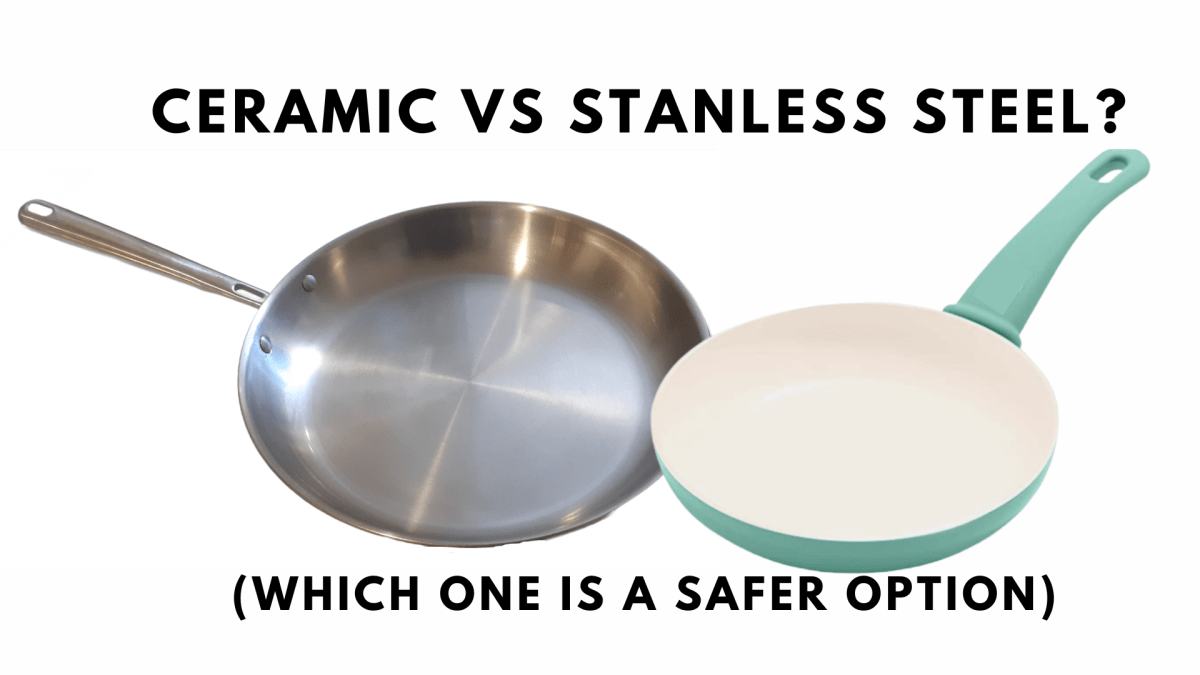
Key safety factors to compare
Here are the factors that matter most when assessing ceramic vs stainless steel cookware safety.
Chemical leaching
Ceramic coatings are marketed as non-toxic. Old or low-quality ceramic glazes may contain cadmium or lead. Stainless steel can leach nickel and chromium, especially with acidic foods and high heat.Heat stability
Stainless steel tolerates high heat well. Many ceramic coatings degrade at very high temperatures and can lose nonstick properties. Follow manufacturer temp limits.Surface damage and flaking
When ceramic coating chips, particles can mix with food. Stainless steel scratched by metal tools may look worn but does not flake in the same way.Reactivity with food
Stainless steel is largely non-reactive, but acidic foods can increase metal leaching slightly. Ceramic surfaces are non-reactive when intact.Cleaning and maintenance
Stainless tolerates scrubbing and ovens better. Ceramic coatings need gentle care to maintain the surface and prevent wear.
These points are central to understanding ceramic vs stainless steel cookware safety. If you control heat and avoid damaged pans, both can be safe choices.
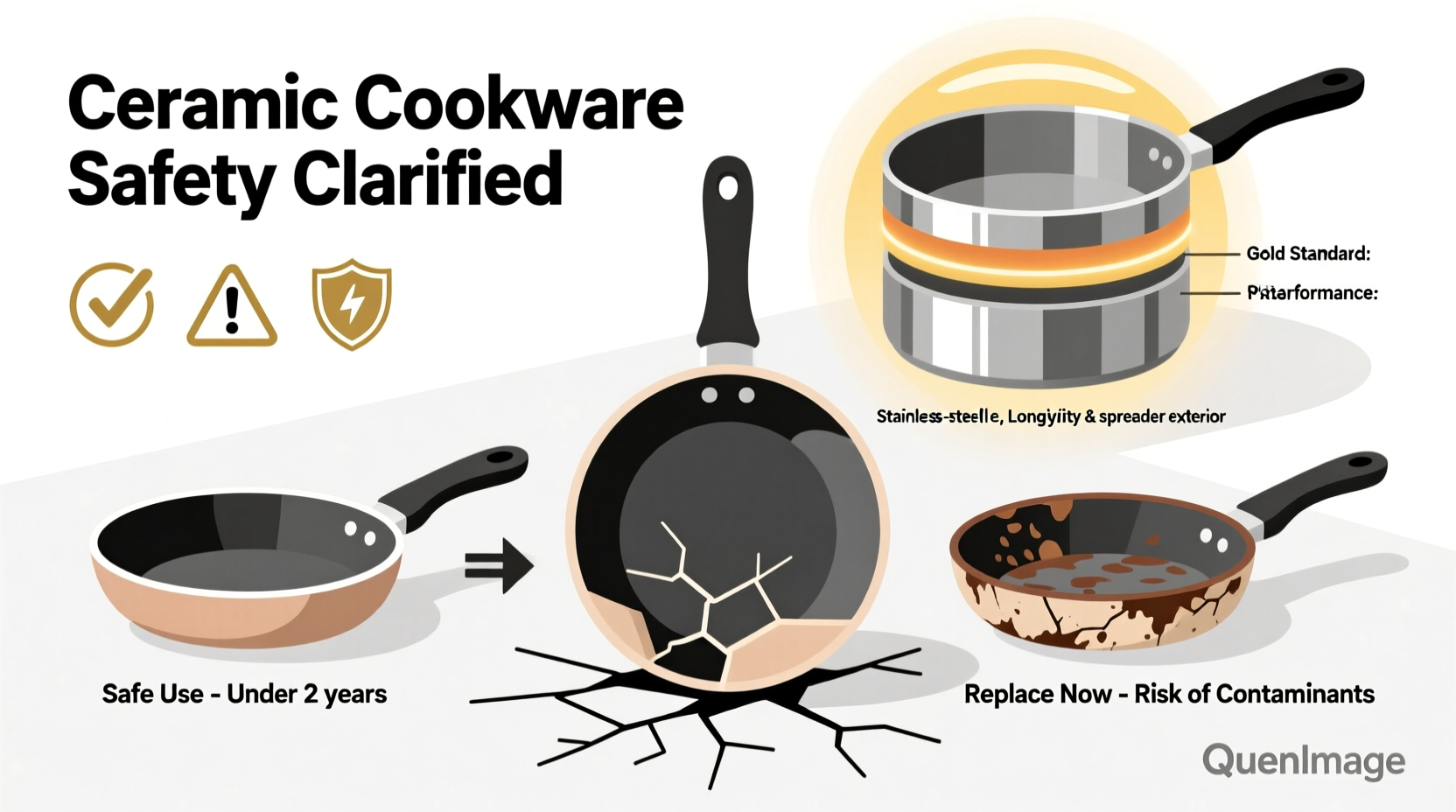
What research and testing show about health risks
Tests and lab studies focus on metal release and coating breakdown. Research shows the following trends.
Metal leaching trends
Nickel and chromium can leach from stainless steel when cooking acidic foods like tomato sauce. Levels usually stay low and below health limits for most people. People with severe nickel allergy should be careful.Coating breakdown and contaminants
Low-quality ceramic glazes sold cheaply sometimes test positive for heavy metals. Reputable brands test to national safety limits and rarely show contamination.Nonstick alternatives and coatings
Traditional PTFE-based nonstick can release fumes if overheated. Many ceramic-coated pans are marketed as PTFE-free. Still, the ceramic layer can degrade with wear.Long-term exposure risk
For most healthy people, occasional use of either cookware poses minimal risk. Regular use of damaged ceramic or cooking very acidic meals in low-grade stainless could raise exposure over time.
These findings frame ceramic vs stainless steel cookware safety. They show that quality and care matter more than brand names alone.
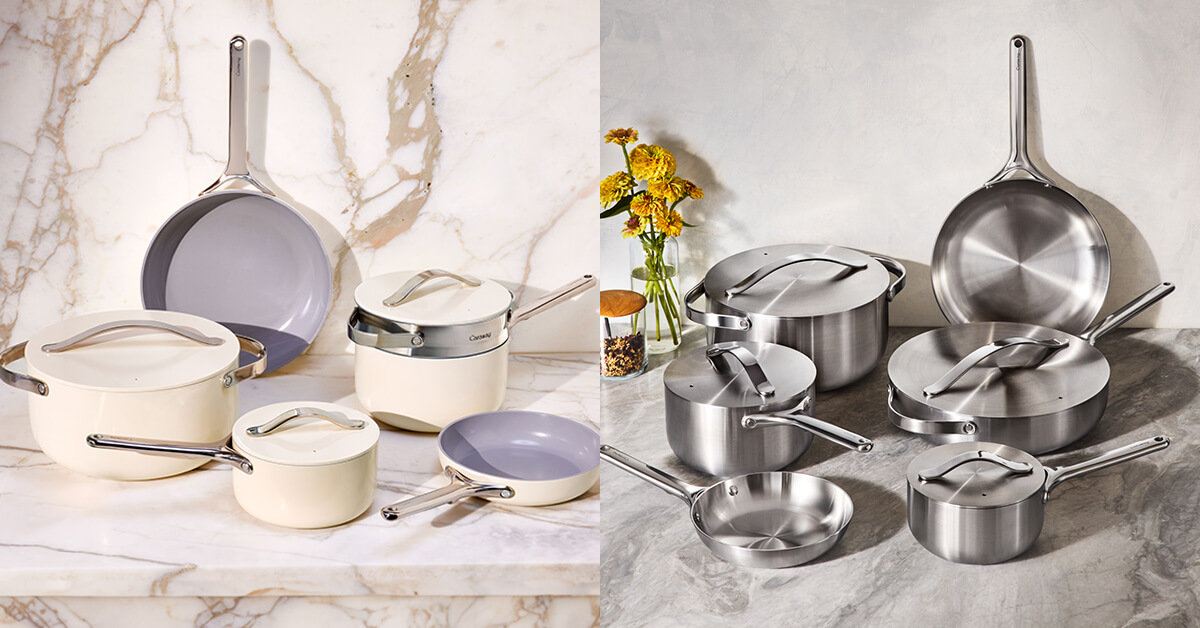
Practical tips to buy and use cookware safely
Follow simple rules to lower risk and extend pan life.
When buying
Choose well-reviewed brands. Look for clear temperature ratings. Prefer fully-clad stainless with thick cores for even heat. For ceramic, look for multiple coats and warranty.In daily use
Avoid heating empty ceramic-coated pans on high. Use medium heat for ceramic to preserve the coating. Stainless can handle higher heat but preheat gradually.Avoid metal tools on ceramic
Use wood, silicone, or nylon utensils with ceramic coatings to prevent scratches. Stainless can take metal tools but avoid aggressive scraping.Cleaning
Hand-wash ceramic pans to prolong the coating. Stainless steel often benefits from higher-heat washing and can tolerate scouring pads.Replace damaged pans
If ceramic coating chips or peels, retire the pan. Replace badly warped or pitted stainless steel cookware.Consider your health status
If you have a nickel allergy, choose low-nickel or nickel-free stainless, or use enamel or cast iron alternatives.
Apply these tips to improve your ceramic vs stainless steel cookware safety quickly and cheaply.
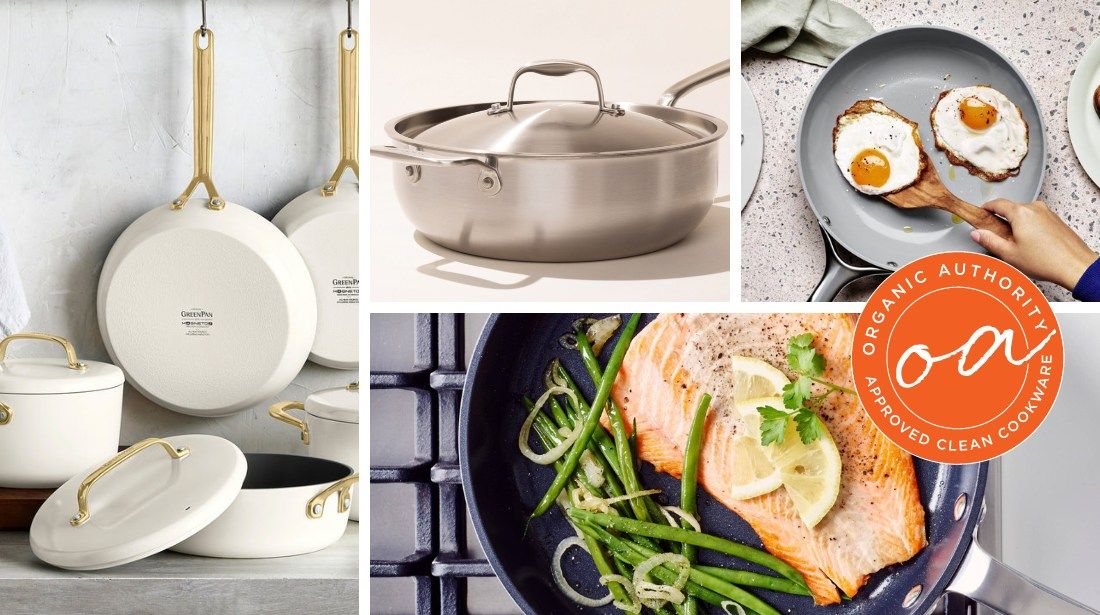
Personal experience and practical lessons
I’ve cooked with both types for years. I used cheap ceramic pans early on and found they lost their smoothness within six months. Food stuck more and the surface showed tiny cracks. I switched to a mid-range ceramic and treated it gently. It lasted longer but still needs careful handling.
My stainless steel sets lasted for years. I burned food a few times while learning heat control. After I adjusted technique, the pans performed well and showed minor wear only. For everyday use, stainless steel proved more durable.
Lessons I’ve learned
- Never overheat ceramic pans.
- Use oil or butter to reduce sticking on stainless steel.
- Inspect pans regularly for chips or heavy discoloration.
- Keep a mix of pans. Use ceramic for gentle eggs and delicate fish. Use stainless for searing and high-heat tasks.
These hands-on tips reflect real-world ceramic vs stainless steel cookware safety experience.
Making the right choice: use cases and decision guide
Pick based on how you cook, your budget, and health needs.
If you cook at high heat often
Choose stainless steel. It’s better for searing, deglazing, and oven work.If you want easier cleanup and lower-fat cooking
Ceramic-coated pans offer nonstick convenience. They work well for eggs and pancakes when new.If you have metal allergies
Consider ceramic-coated with a good base or alternative surfaces. Confirm nickel content in stainless if allergy is a concern.For longevity and value
Stainless steel often gives the best long-term value. It resists wear and can be re-polished.For beginners
A small ceramic nonstick can save time and reduce cooking stress. Be ready to replace it sooner than stainless.
Use this guide to match your needs and improve ceramic vs stainless steel cookware safety in real life.
Frequently Asked Questions of ceramic vs stainless steel cookware safety
Can ceramic coatings release toxins into food?
High-quality ceramic coatings are formulated to be non-toxic. Low-quality glazes may contain heavy metals if not tested, so buy from reputable brands.
Is stainless steel safe for acidic foods?
Stainless steel is generally safe for acidic foods, though small amounts of nickel or chromium can leach. For sensitive people, choose low-nickel options.
Which is better for high-heat cooking: ceramic or stainless steel?
Stainless steel is better for high heat. Ceramic coatings can break down at very high temperatures, reducing safety and performance.
How do I know when to replace a ceramic pan?
Replace ceramic pans when the coating chips, flakes, or shows deep cracks. Visible damage raises the chance of particles mixing with food.
Are there special cleaning tips to keep cookware safe?
Yes. Hand-wash ceramic to preserve the coating and avoid harsh scrubbers. Use hot water and good detergent for stainless steel and rinse well.
Does cooking with stainless steel increase metal exposure over time?
Regular cooking in stainless steel may release trace metals, but levels are typically low for most people. If you have concerns, rotate cookware types and avoid prolonged storage of acidic foods in metal.
Conclusion
Both ceramic vs stainless steel cookware safety come down to quality and care. Buy well-made pans, follow temperature and use guidelines, and replace damaged pieces. For high-heat work and durability, choose stainless steel. For gentle, low-fat cooking and easy cleanup, choose ceramic—but treat it gently. Try a mix in your kitchen to match each pan to its best task.
Take action today: check the pans you own, retire any with chipped coatings, and pick one new piece that fits how you cook. Share your experiences or questions below to keep the conversation going.