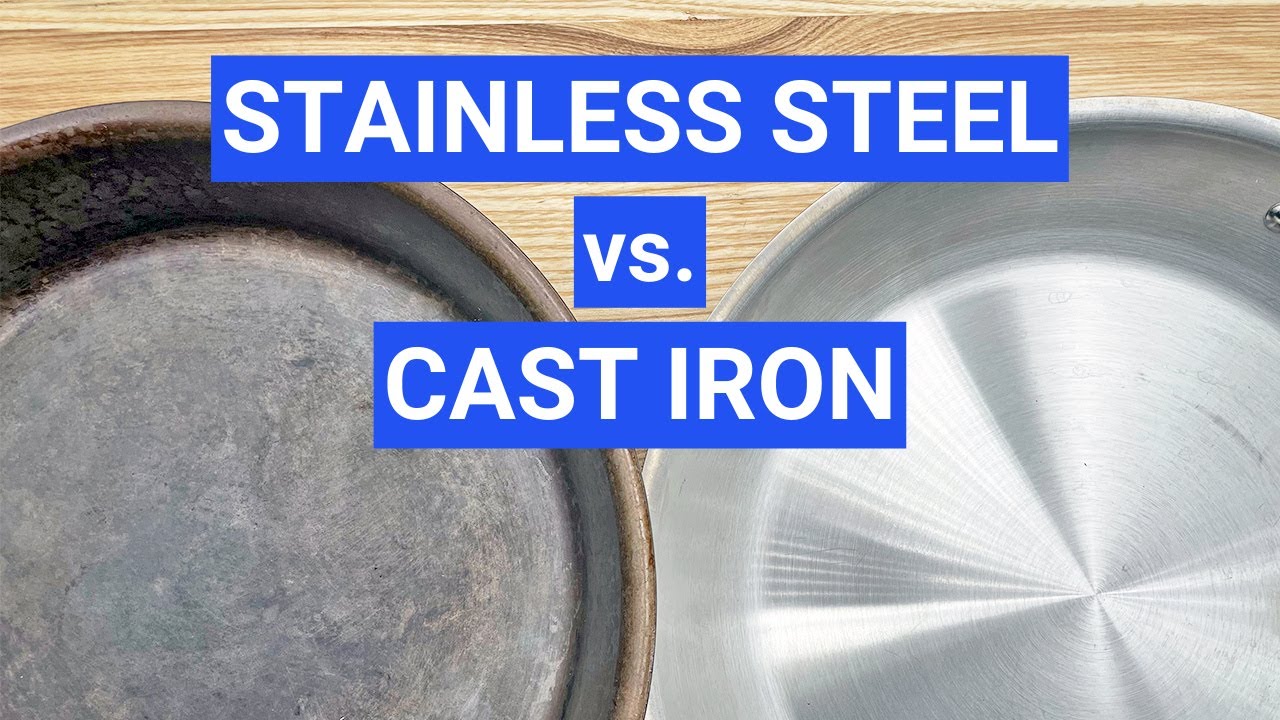
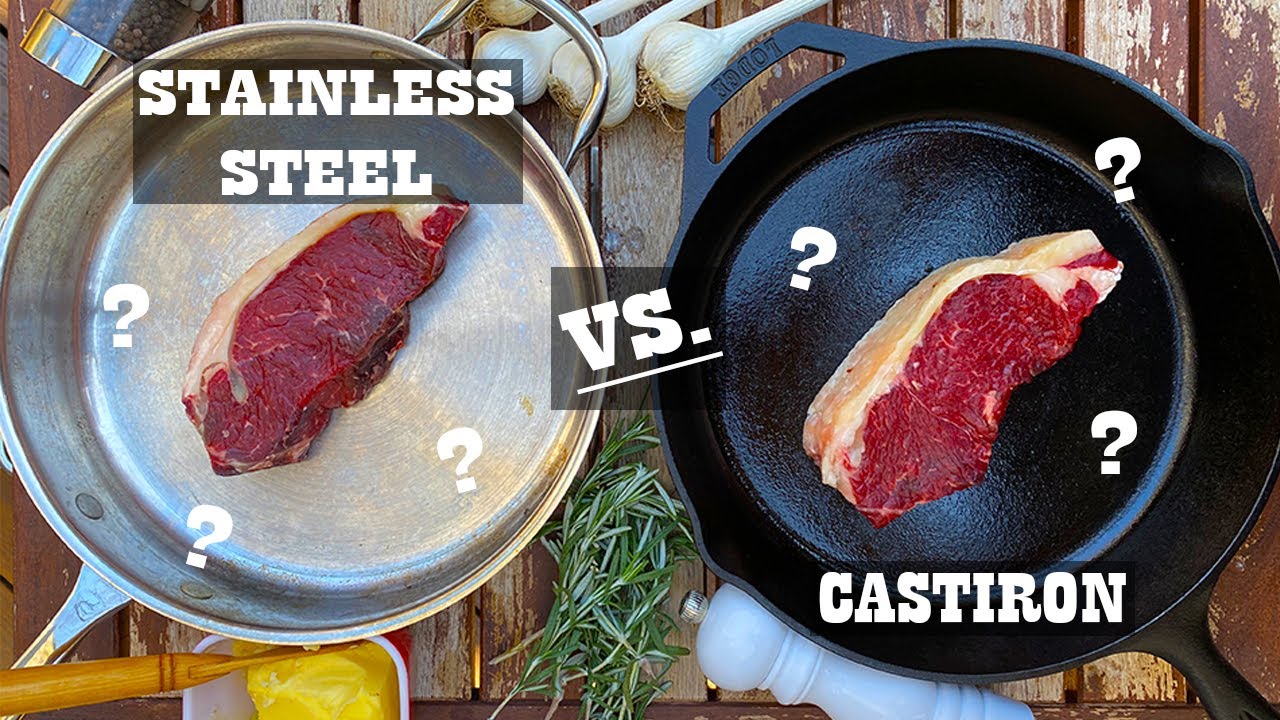
Cast iron wins for searing and heat retention; stainless steel excels for quick, non-reactive cooking.
I have cooked professionally and at home with both pans for years. This article gives a clear, deep, and practical cast iron vs stainless steel cooking comparison. You will get material facts, cooking performance, health notes, maintenance tips, recipe ideas, and the trade-offs to choose the right pan for your needs. Read on for hands-on guidance and simple steps to use and care for both types of cookware.
Material and construction differences
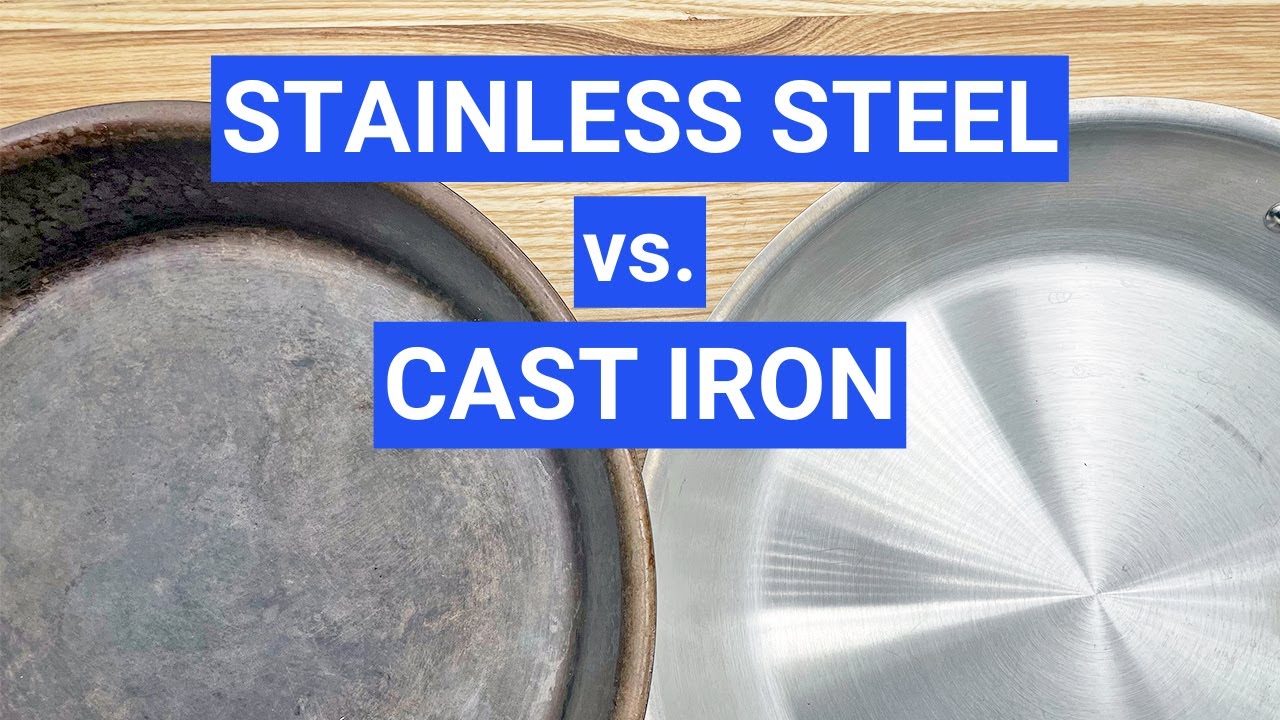
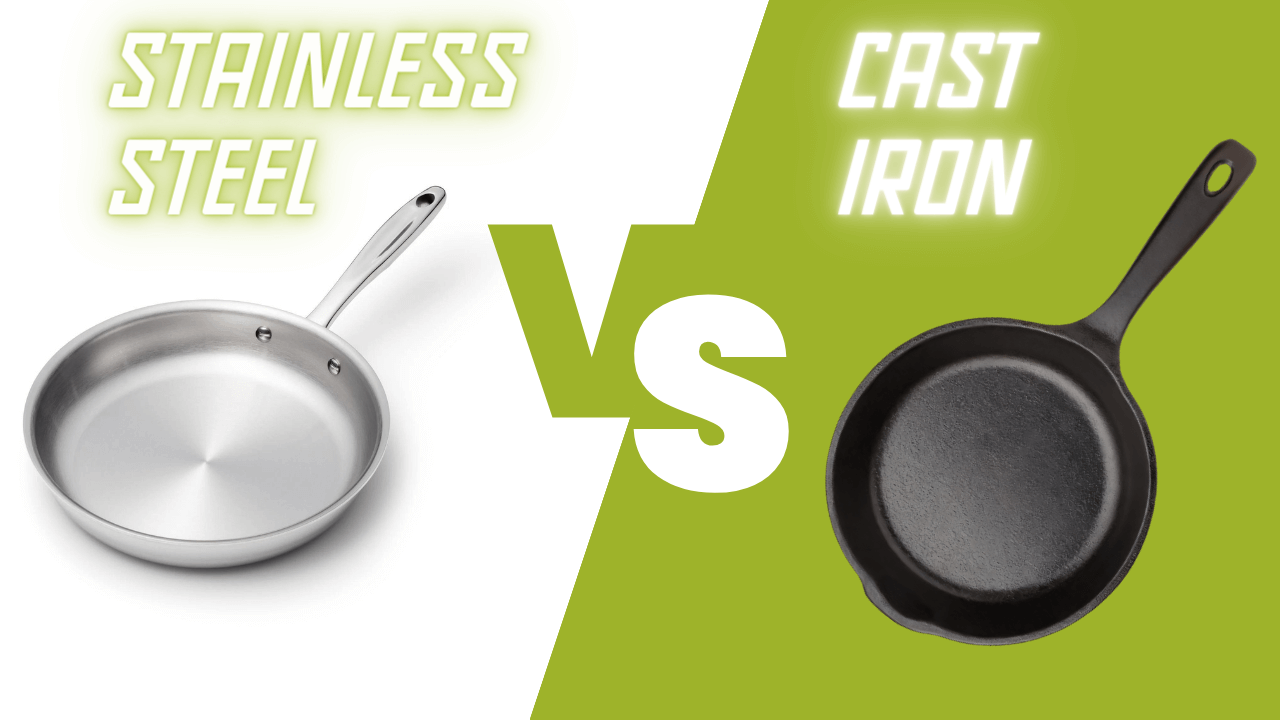
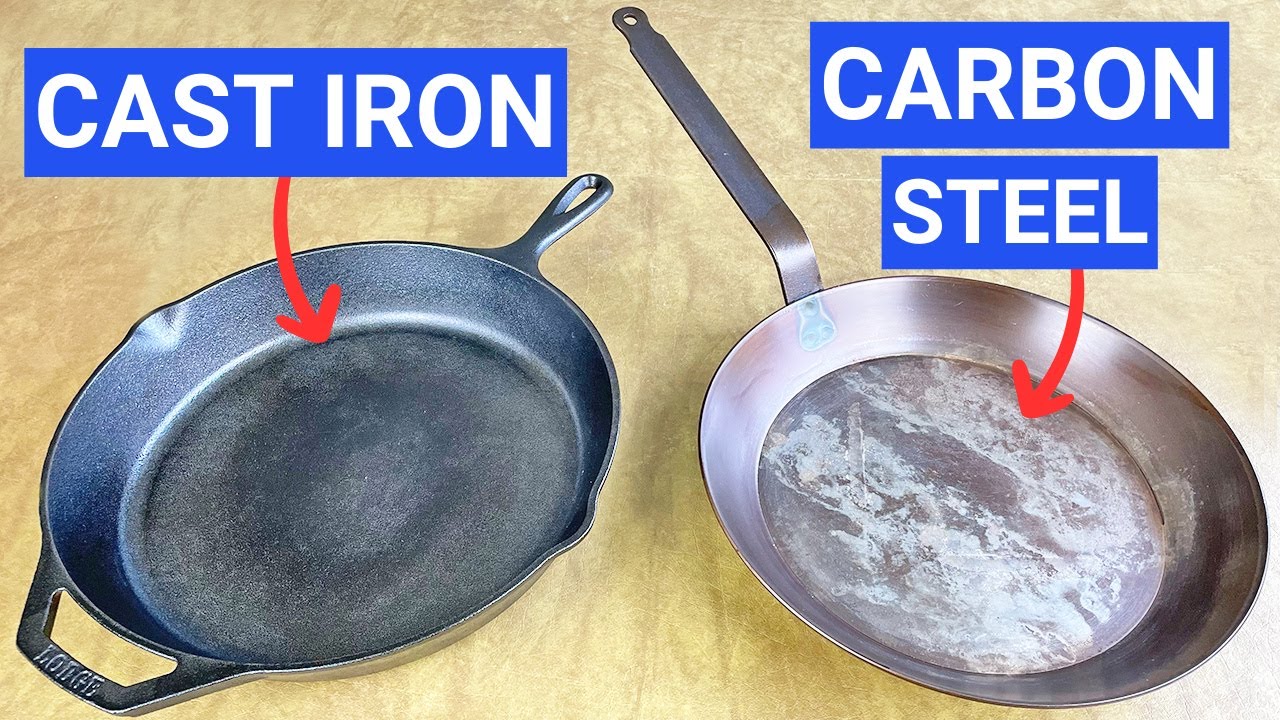
Cast iron is a dense alloy of iron and carbon. It is heavy. It stores and holds heat well. Cast iron surfaces are usually seasoned, which adds a thin layer of polymerized oil that helps resist sticking.
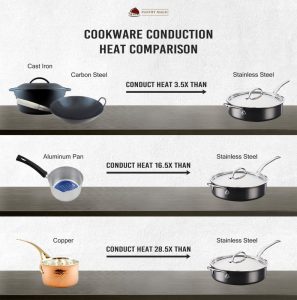
Stainless steel is an alloy of iron with chromium and often nickel. It is lighter than cast iron. It is non-reactive and resists rust. Many stainless pans have an aluminum or copper core for better heat spread.
Key points to note:
- Cast iron: heavy, high heat capacity, requires seasoning.
- Stainless steel: lighter, non-reactive, often layered for heat distribution.
- Both are safe for oven use and long lasting if cared for.
This cast iron vs stainless steel cooking comparison shows how materials shape cooking behavior and care.
Heat performance and cooking results
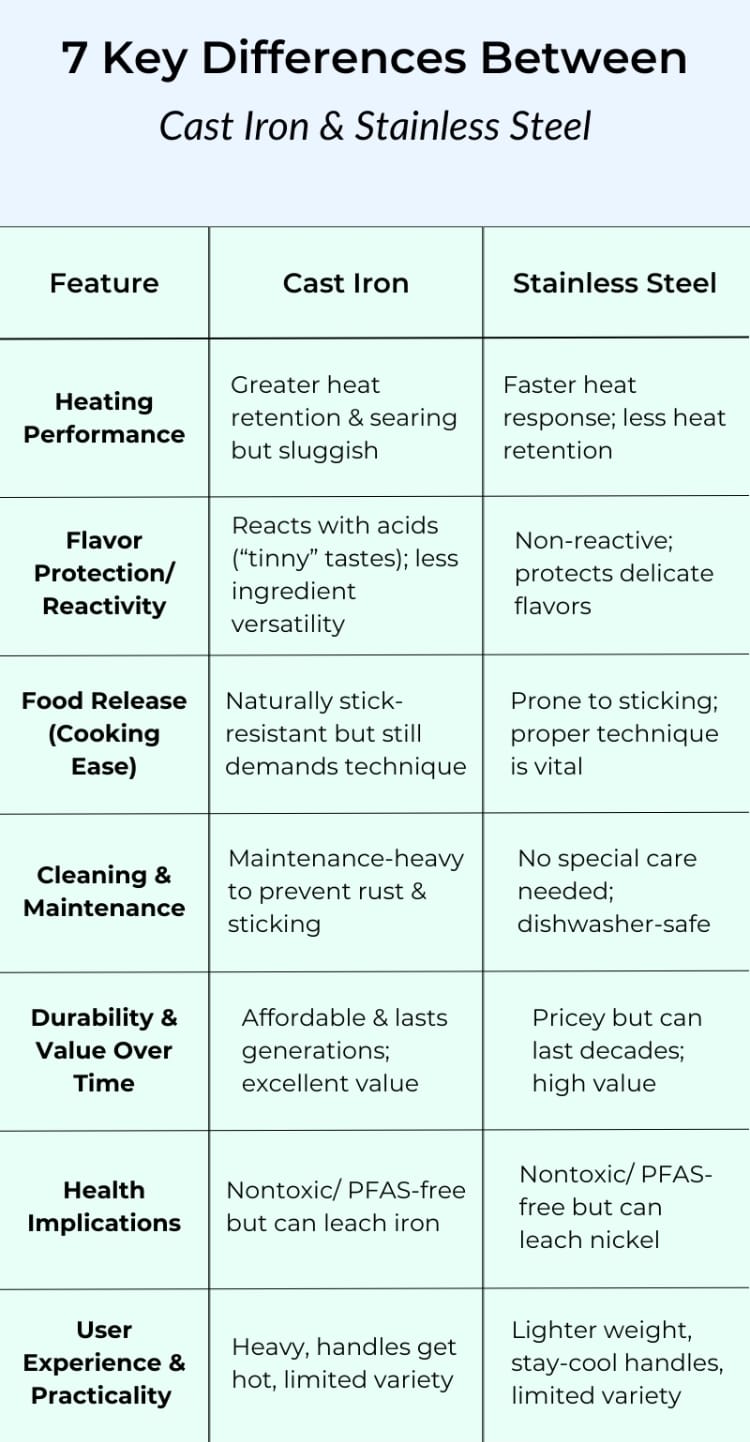
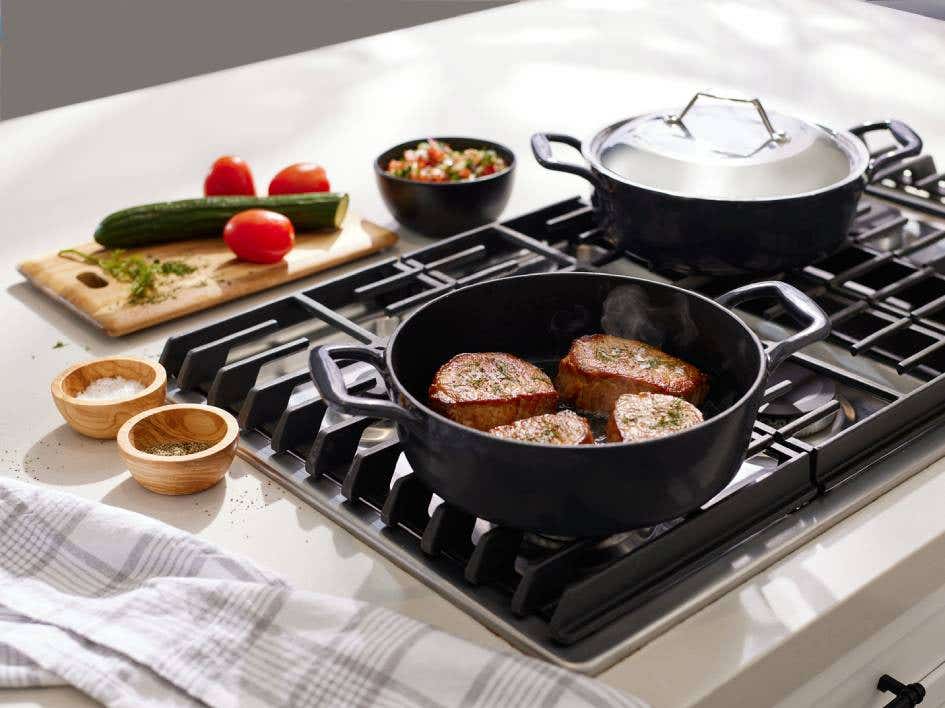
Cast iron excels at heat retention. It takes time to heat up. Once hot, it sears meat well and keeps temperature steady. This makes cast iron ideal for steaks, braises, and oven work.
Stainless steel heats faster and responds quickly to changes in stove heat. It browns foods well when used correctly and is better for tasks that need precise temperature shifts. It is often preferred for sauces, sautéing, and deglazing.
Practical examples:
- Use cast iron for searing steaks, frying chicken, or baking cornbread.
- Use stainless steel for pan sauces, quick sautés, and delicate fish.
This cast iron vs stainless steel cooking comparison highlights that cast iron wins for steady, high-heat jobs while stainless steel is best for control and quick changes.
Non-stick behavior and food release
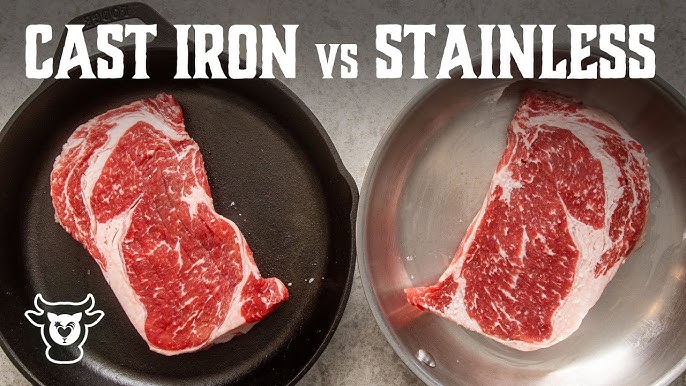
Seasoned cast iron has a natural non-stick surface. It improves with use. High-acid foods can wear seasoning, so use care with tomatoes or wine unless the pan is very well seasoned.
Stainless steel is not non-stick by nature. Proper preheating and correct oiling cut down sticking. Many cooks use a medium-high heat technique: heat pan, add oil, wait until shimmering, then add food.
Tips to reduce sticking:
- For cast iron: keep seasoning healthy, avoid abrupt cleaning that strips oil.
- For stainless steel: preheat pan and oil; don’t crowd the pan.
The cast iron vs stainless steel cooking comparison shows different non-stick strategies for each pan type.
Maintenance and care
Cast iron care is simple but consistent:
- Clean with hot water and a stiff brush. Avoid soap if seasoning is young.
- Dry immediately and oil lightly to prevent rust.
- Re-season if food starts to stick often.
Stainless steel care is low-effort:
- Use hot, soapy water and scrub pads for stuck food.
- For discoloration, use a mild abrasive or a baking soda paste.
- Most stainless cookware is dishwasher safe, though handwashing preserves finish.
Common mistakes I made:
- Letting cast iron sit wet and rust. That cost me a pan rebuild.
- Overheating empty stainless steel, causing food to stick later.
This cast iron vs stainless steel cooking comparison stresses routine care to keep performance consistent.
Health, safety, and food chemistry
Cast iron can leach small amounts of iron into food. This can add dietary iron, which helps some people. Acidic foods increase iron transfer slightly. Most transfers are safe for the general population but monitor if you have iron overload conditions.
Stainless steel is non-reactive and won’t change the taste of acidic dishes. Some grades contain nickel, which can be an allergen for a small number of people. High-quality stainless cookware uses stable alloys that resist corrosion.
Safety checklist:
- Cast iron: good for adding iron; avoid if advised by a doctor.
- Stainless steel: low reactivity; check for nickel if you have allergies.
This cast iron vs stainless steel cooking comparison addresses how materials interact with food and health.
Cost, durability, and sustainability
Cast iron and stainless steel both last decades with proper care. Cast iron tends to be cheaper per piece. Vintage cast iron can be inexpensive and durable. Stainless steel sets cost more, especially multi-ply cores that improve heat distribution.
Durability points:
- Cast iron: can crack if dropped; otherwise nearly eternal.
- Stainless steel: resists denting and corrosion; handles dishwasher use.
Sustainability note:
- Long lifespan of both reduces waste.
- Repairing and re-seasoning cast iron extends life. Recycling metal at end of life is common.
This cast iron vs stainless steel cooking comparison shows both are sustainable choices when they are used and maintained.
Practical tips, recipes, and how to choose
How to pick the right pan:
- Choose cast iron if you like searing, oven-to-table cooking, and a pan that improves with age.
- Choose stainless steel if you want fast heat control, easy cleaning, and neutral reactivity.
Recipe ideas:
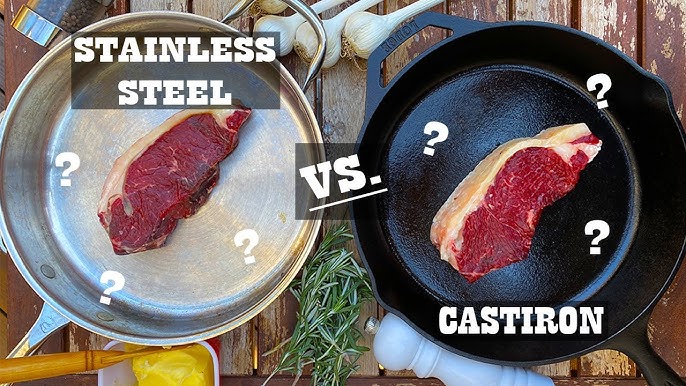
- Cast iron: pan-seared ribeye, skillet cornbread, cast-iron lasagna.
- Stainless steel: pan-roasted salmon with pan sauce, stir-fries, scrambled eggs done carefully.
Quick use tips:
- Preheat stainless steel. Use enough oil. Let fond form before deglazing.
- Warm cast iron slowly. Avoid sudden temperature shocks. Restore seasoning with a thin oil coat.
From my experience, a kitchen benefits from having one of each. I use cast iron for bold, high-heat jobs and stainless steel for daily quick cooking. This cast iron vs stainless steel cooking comparison helps you match cookware to tasks.
People also ask
Does cast iron make food taste better?
Many cooks say yes for seared foods because cast iron gives better crust and steady heat. Taste is subjective, but cast iron often enhances browning and mouthfeel.
Can I use stainless steel for eggs?
Yes, but heat control matters. Use moderate heat, preheat the pan, and use enough fat to prevent sticking.
Will cast iron rust in the dishwasher?
Yes. Dishwashers strip seasoning and promote rust. Hand wash cast iron and dry it well.
This short PAA section complements the deeper cast iron vs stainless steel cooking comparison.
Frequently Asked Questions of cast iron vs stainless steel cooking comparison
Is cast iron healthier than stainless steel?
Both are safe. Cast iron can add iron to food, which may benefit some people. Stainless steel is non-reactive and better if you avoid extra metal intake.
Which pan is easier for beginners?
Stainless steel is easier to clean and maintain. Cast iron needs seasonal care and learning to build seasoning, but it is forgiving once seasoned.
Can I cook acidic foods in cast iron?
You can, but acidic foods can strip seasoning and may taste metallic. Use well-seasoned cast iron or choose stainless steel for long acidic simmering.
Do stainless steel pans need oil?
Yes. Stainless steel needs oil or fat to help food release and to aid browning. Proper preheating before adding oil helps a lot.
How long do these pans last?
Both can last decades. Cast iron can be passed down generations if not cracked. Stainless steel multi-ply cookware can also last for many years with proper use.
Conclusion
This cast iron vs stainless steel cooking comparison shows there is no one-size-fits-all winner. Cast iron wins for heat retention, searing, and rustic oven dishes. Stainless steel wins for quick heat control, low maintenance, and non-reactivity. Choose based on how you cook: high-heat and slow dishes favor cast iron; precise, quick cooking favors stainless steel. Try both if you can. Start with one pan that fits your common meals, practice the care steps listed here, and share what works for you. If you found this useful, try a recipe with one of these pans and leave a comment with your results.