Ceramic heats fast and cleans easy, while cast iron holds heat longer and needs more care.
I’ve tested pans in home and pro kitchens for years, so I can help you Compare ceramic vs cast iron cookware performance and maintenance with clear, practical advice. This guide breaks down how each material cooks, how each one ages, and what real care looks like. Read on for side-by-side details, real-life tips, and actionable buying and care advice so you can choose the right cookware for your kitchen and lifestyle.
Performance: heat, cooking results, and longevity
Ceramic and cast iron excel in different ways. Cast iron holds heat like a slow heater. Ceramic heats quickly and offers even nonstick performance at first. When you Compare ceramic vs cast iron cookware performance and maintenance, think about how you cook most.
Heat retention and distribution
- Cast iron stores heat well and gives steady temperature for searing and frying.
- Ceramic heats fast and can deliver even surfaces for gentle cooking.
- Cast iron can stay hot long after you remove it from the flame, which helps with crusts.
- Ceramic can cool quickly, which is handy when you need temperature control.
Nonstick and surface behavior
- Ceramic coatings are slick when new and let egg and fish slide easily.
- Seasoned cast iron becomes naturally nonstick over time with proper care.
- Ceramic can lose slickness from metal tools and high heat.
- Cast iron can improve with use but will stick when under-seasoned.
Durability and high-heat use
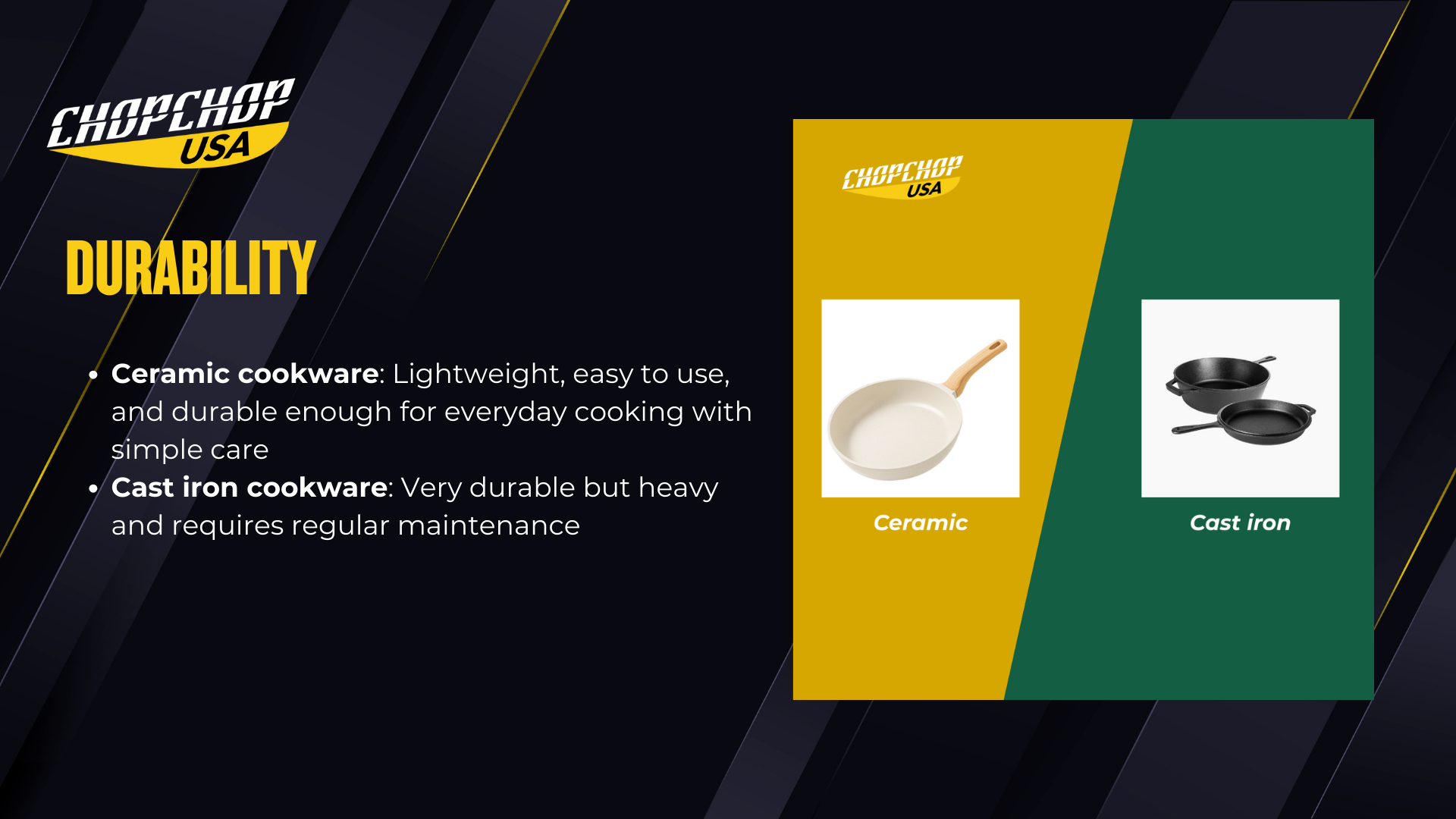
- Cast iron tolerates very high heat and oven use without damage.
- Ceramic-coated pans can crack or discolor if overheated or shocked.
- When you Compare ceramic vs cast iron cookware performance and maintenance, cast iron wins for heavy-duty, long-term use.
- Ceramic works well for low to medium heat and delicate foods.
Weight and handling
- Cast iron is heavy and feels solid. It transfers heat slowly when moved.
- Ceramic is lighter and easier to lift and store.
- If you cook for one, ceramic may feel more practical. If you host often, cast iron's heat is useful.
Maintenance: cleaning, seasoning, and lifespan
Maintenance affects how well pans perform over time. When you Compare ceramic vs cast iron cookware performance and maintenance, the upkeep will shape the pan’s lifetime and cooking feel.
Cleaning and daily care
- Ceramic cleans easily with warm, soapy water and a soft sponge.
- Cast iron should be wiped or rinsed and dried immediately to avoid rust.
- Avoid harsh scrubbers on ceramic coatings; they can scratch the surface.
- For cast iron, a stiff brush and hot water usually suffice; use mild soap sparingly.
Seasoning, rust, and coating wear
- Ceramic has no seasoning. Once the coating degrades, it may lose nonstick properties.
- Cast iron relies on seasoning; re-seasoning restores nonstick and protects from rust.
- When you Compare ceramic vs cast iron cookware performance and maintenance, cast iron needs intentional care but can be renewed easily.
Dishwasher and oven safety
- Most ceramic-coated cookware is labeled hand-wash only; dishwashers shorten the coating life.
- Cast iron can go in the oven and is often dishwasher-unsafe because soap and moisture strip seasoning.
- Ceramic can be fine in ovens at moderate temps if the manufacturer allows it.
Lifespan and signs it’s time to replace
- Ceramic pans may last 2–7 years depending on use and care.
- Cast iron can last generations if well cared for.
- When you Compare ceramic vs cast iron cookware performance and maintenance, cast iron offers greater longevity with steady upkeep.
Cooking use-cases, recipes, and examples
Match the pan to the task. I use both daily and switch by recipe. When you Compare ceramic vs cast iron cookware performance and maintenance, think about recipes you cook most.
- For searing steaks and making cornbread: cast iron. The pan keeps a hard sear and a great crust.
- For eggs, crepes, and delicate fish: ceramic. The slick surface helps avoid tearing.
- For one-pan suppers that start on the stove and finish in the oven: cast iron is reliable.
- For quick sautéing and low-fat cooking: ceramic makes cleanup easier.
Real-life example: I once tried a cast iron pan for a delicate omelet and it stuck badly because it lacked seasoning. After re-seasoning, it performed well. That taught me to choose ceramic for eggs unless I keep cast iron seasoned.
When you Compare ceramic vs cast iron cookware performance and maintenance, choose based on your menu and how much time you want to spend on care.
Buying, care tips, and common mistakes to avoid
Practical advice from hands-on experience. I’ve replaced pans that were misused. Avoid these common errors and follow simple care steps.
What to look for when buying
- Choose heavy-gauge cast iron for even heat.
- Look for thick ceramic coating from reputable makers to avoid early flaking.
- Check oven safety and max temperature ratings for ceramic pans.
Simple daily care routine
- Ceramic: wash with warm, soapy water and a soft cloth; avoid high heat.
- Cast iron: rinse, dry immediately, and rub with a thin layer of oil after cooling.
- Store cast iron in a dry place; stack with paper towels between pans to protect surfaces.
Mistakes to avoid
- Using metal utensils on ceramic; this speeds coating wear.
- Letting cast iron soak in water; this causes rust.
- Putting cold ceramic into a hot oven; thermal shock can warp or crack.
Cost vs value
- Ceramic is often cheaper up front but may need replacement sooner.
- Cast iron costs more in effort but pays off with decades of use.
- When you Compare ceramic vs cast iron cookware performance and maintenance, weigh replacement cost against the time you’ll spend on care.
People also ask (short answers)
Is ceramic or cast iron healthier for cooking?
Both can be healthy. Ceramic has no added oils; cast iron can add small amounts of iron to food, which can be beneficial for some people.
Can you use metal utensils on ceramic pans?
Avoid metal tools on ceramic to prevent scratches. Use silicone or wood to extend the coating life.
How often should I season cast iron?
Season lightly after each thorough clean and deeply every few months if you use it often. Regular light oiling keeps the surface nonstick.
Frequently Asked Questions of Compare ceramic vs cast iron cookware performance and maintenance
How do I re-season cast iron when it starts sticking?
Clean the pan, dry fully, then rub a thin layer of oil on the surface and bake it upside down in the oven at 400°F for an hour. Repeat if needed until a smooth, dark layer forms.
Can ceramic coatings be repaired if they chip?
Minor chips cannot be reliably repaired at home; replacement is usually the safest choice because flakes can contaminate food.
Is cast iron safe for acidic foods like tomato sauce?
Long-simmering acidic foods can strip some seasoning and transfer iron flavor. Short cooking is fine, but for long acidic stews, use enameled cast iron or ceramic.
Will ceramic pans handle high-heat searing?
Most ceramic coatings lose nonstick performance at very high heat and can crack. Stick to medium-high for ceramic and use cast iron for true high-heat searing.
How should I store ceramic and cast iron to avoid damage?
Store ceramic pans with gentle stacking or with a cloth between them. Keep cast iron dry and lightly oiled; avoid sealed plastic storage that traps moisture.
Conclusion
Both materials have clear strengths. Cast iron delivers unmatched heat retention, durability, and a naturally improving nonstick surface with seasoning. Ceramic offers light weight, ease of cleaning, and a slick surface for low to medium-heat cooking. Compare ceramic vs cast iron cookware performance and maintenance by matching the pan to your cooking habits and your willingness to care for it. Try one of each for a balanced kitchen, keep simple care routines, and you’ll gain cooking tools that serve you well.
Take action: pick one pan to start with based on the recipes you cook most. Share your experience or questions below, or subscribe for more hands-on cookware tips.