Cast iron cookware care for beginners: clean, dry, and season regularly to build a lasting nonstick surface.
I’ve cooked with cast iron for over a decade and helped friends restore old skillets. This guide on cast iron cookware care for beginners explains step-by-step how to season, clean, store, and protect your pans. Read on for simple, reliable routines, common mistakes, and hands-on tips that make cast iron easy and rewarding to use.
Why choose cast iron and what to expect
Cast iron cookware care for beginners starts with understanding why cast iron matters. Cast iron cooks evenly, lasts for generations, and improves with use. It is heavy and retains heat well, making it ideal for searing, frying, and baking.
Expect a learning curve. Cast iron needs care. But the payoff is a durable, natural nonstick surface that can replace many modern pans. My early mistakes taught me that small habits—drying well and re-oiling—prevent most problems.
What seasoning is and why it matters
Seasoning is the thin layer of polymerized oil bonded to the metal. Seasoning protects the pan from rust and builds a nonstick surface over time. Good seasoning makes cooking and cleaning much easier.
How to season a pan (basic method)
- Clean the pan: Wash with hot water and a scrub (avoid soap if brand new seasoned). Dry completely.
- Apply oil: Rub a thin layer of a high-smoke-point oil on all surfaces.
- Bake the pan: Place upside down in an oven at 400–500°F for one hour. Put foil underneath to catch drips.
- Cool in the oven. Repeat 2–3 times for new or stripped pans.
Personal tip: I use a light coat of flaxseed oil or vegetable oil and bake twice. Thin coats matter more than thick layers. Thick oil can turn sticky.
Seasoning is central to cast iron cookware care for beginners. Treat it like paint: thin layers, patience, repeat.
Daily cleaning: simple habits that protect your pan
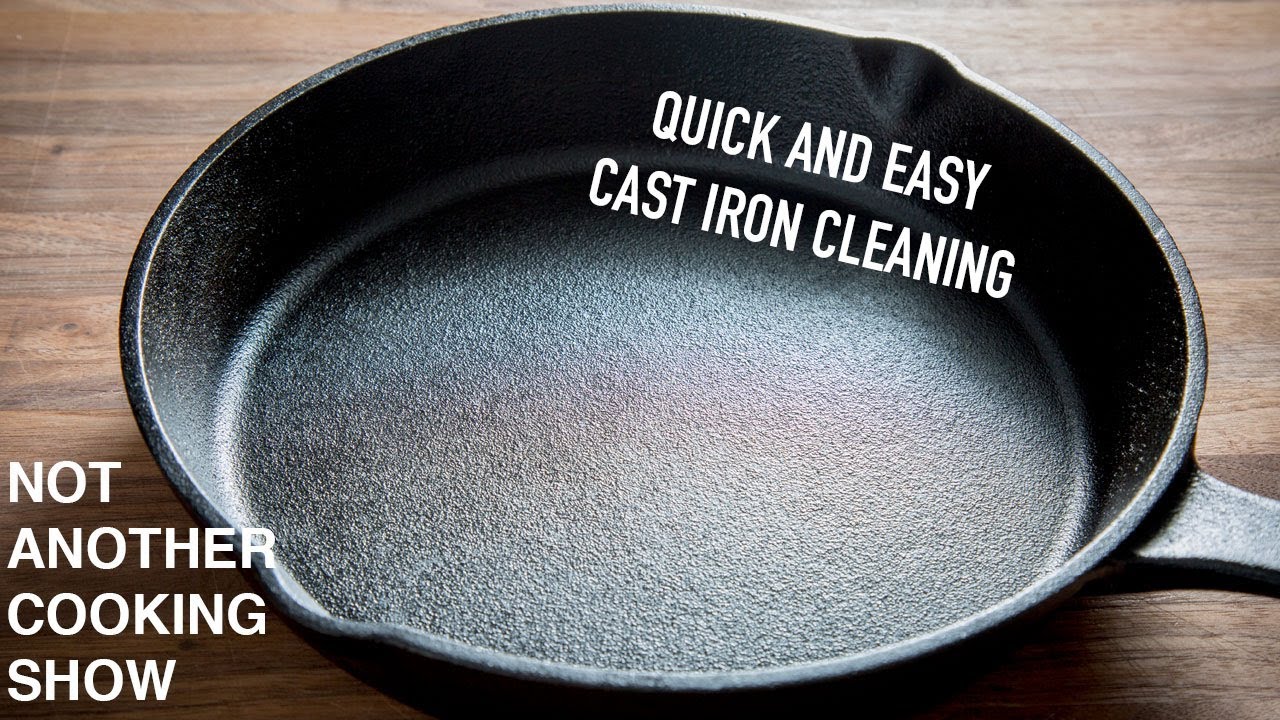
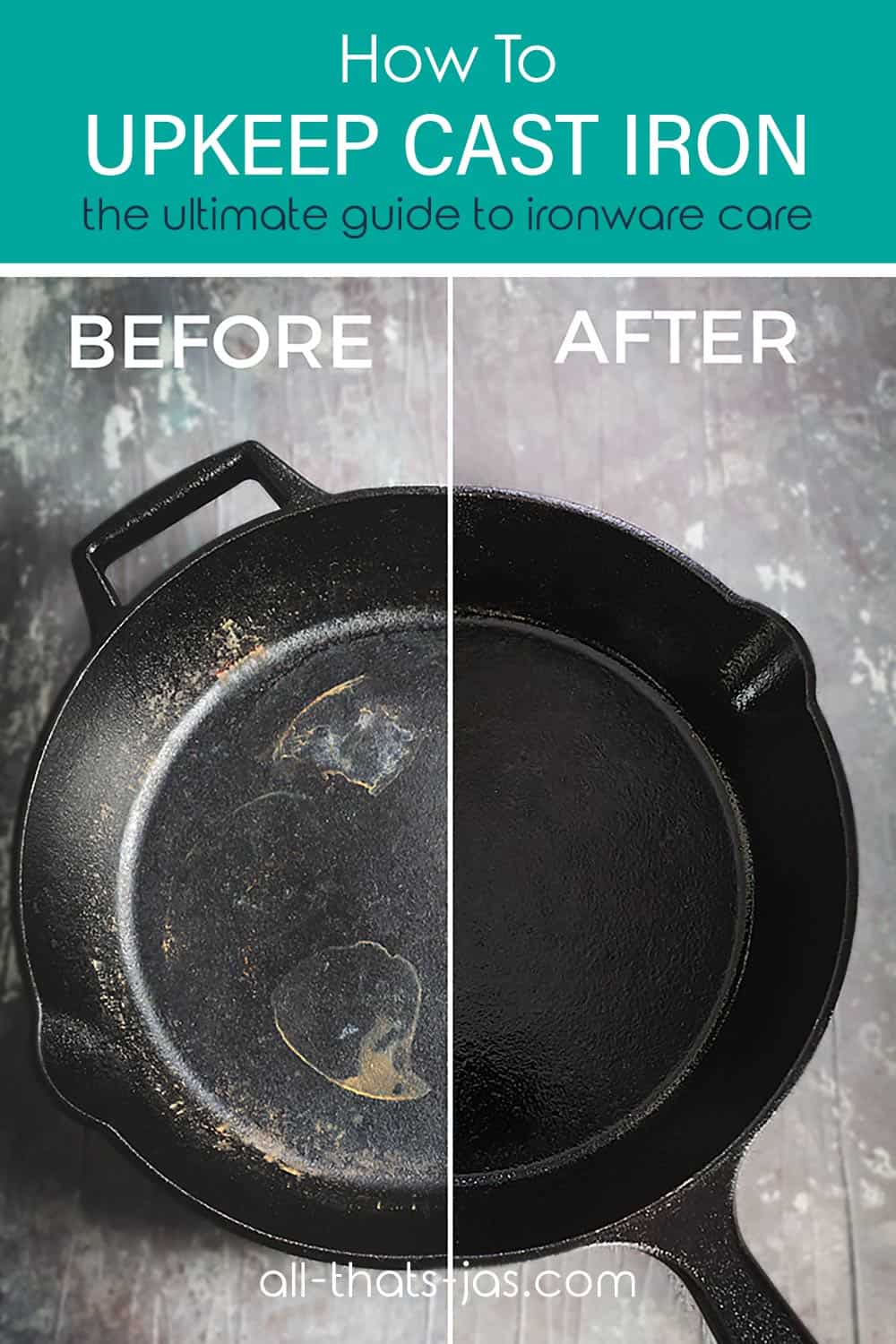
Keep cleaning short and consistent to protect seasoning. After cooking, let the pan cool slightly, then clean while warm.
Routine cleaning steps
- Rinse with hot water and wipe with a sponge or stiff brush.
- For stuck food, simmer a little water for a few minutes to loosen residue.
- Dry completely with a towel, then heat briefly on the stove to evaporate remaining moisture.
- Rub a thin coat of oil on the cooking surface once dry.
Avoid soaking cast iron or leaving it to air-dry. These are common causes of rust. A quick wipe and light oil keep the surface happy. Following these steps is a core part of cast iron cookware care for beginners.
Removing stuck food and light stains
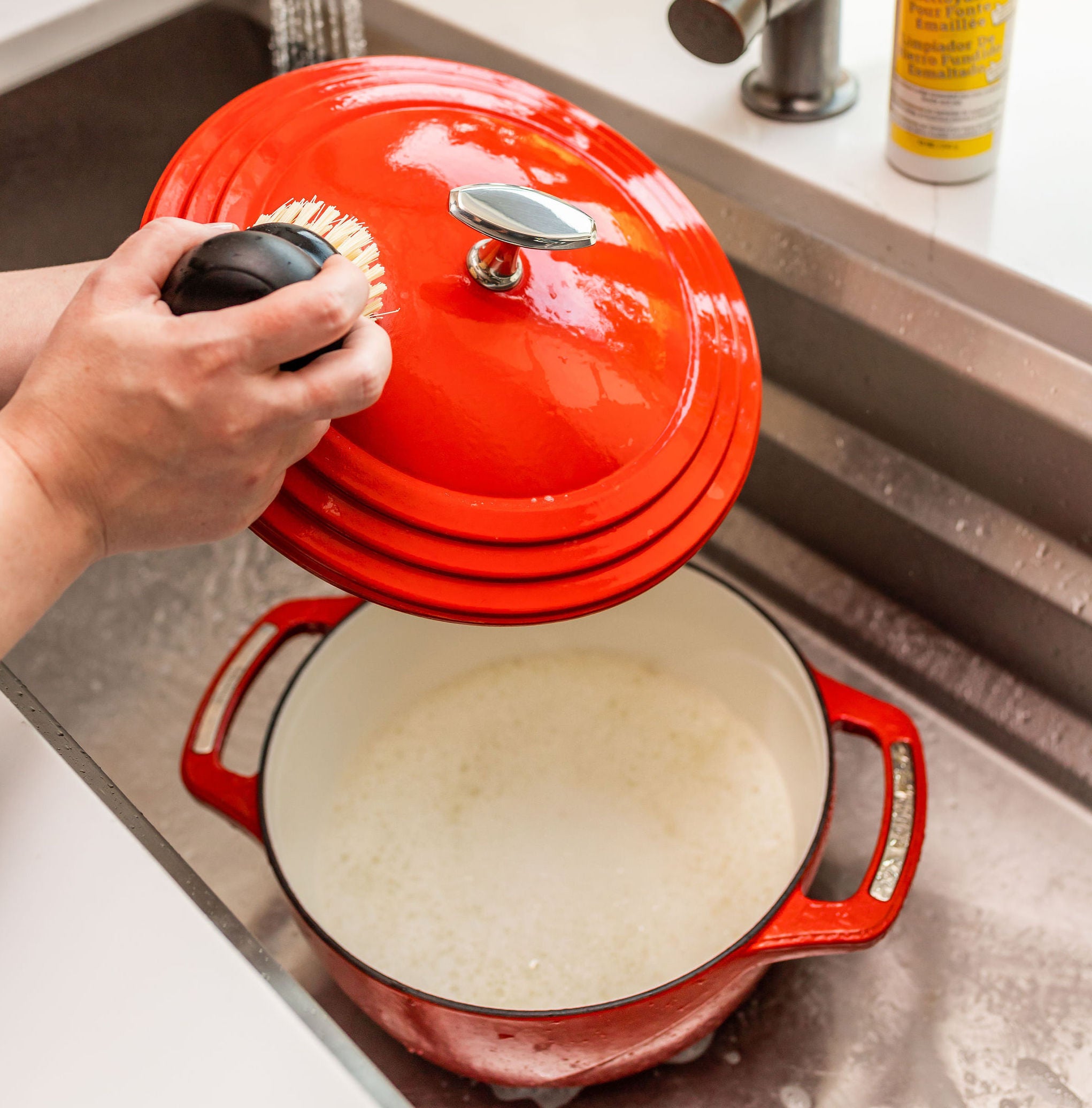
For light stuck-on bits, use a chainmail scrubber or a stiff brush. Salt scrubs work well as a gentle abrasive.
Salt scrub method
- Pour a tablespoon of coarse kosher salt into the warm pan.
- Add a little water or a splash of oil.
- Scrub with a paper towel or cloth until residue loosens.
- Rinse, dry, and oil.
This method cleans without hurting the seasoning. I use it for morning eggs or when a pan has light build-up. It’s safe, cheap, and effective for cast iron cookware care for beginners.
Deep cleaning and rust removal
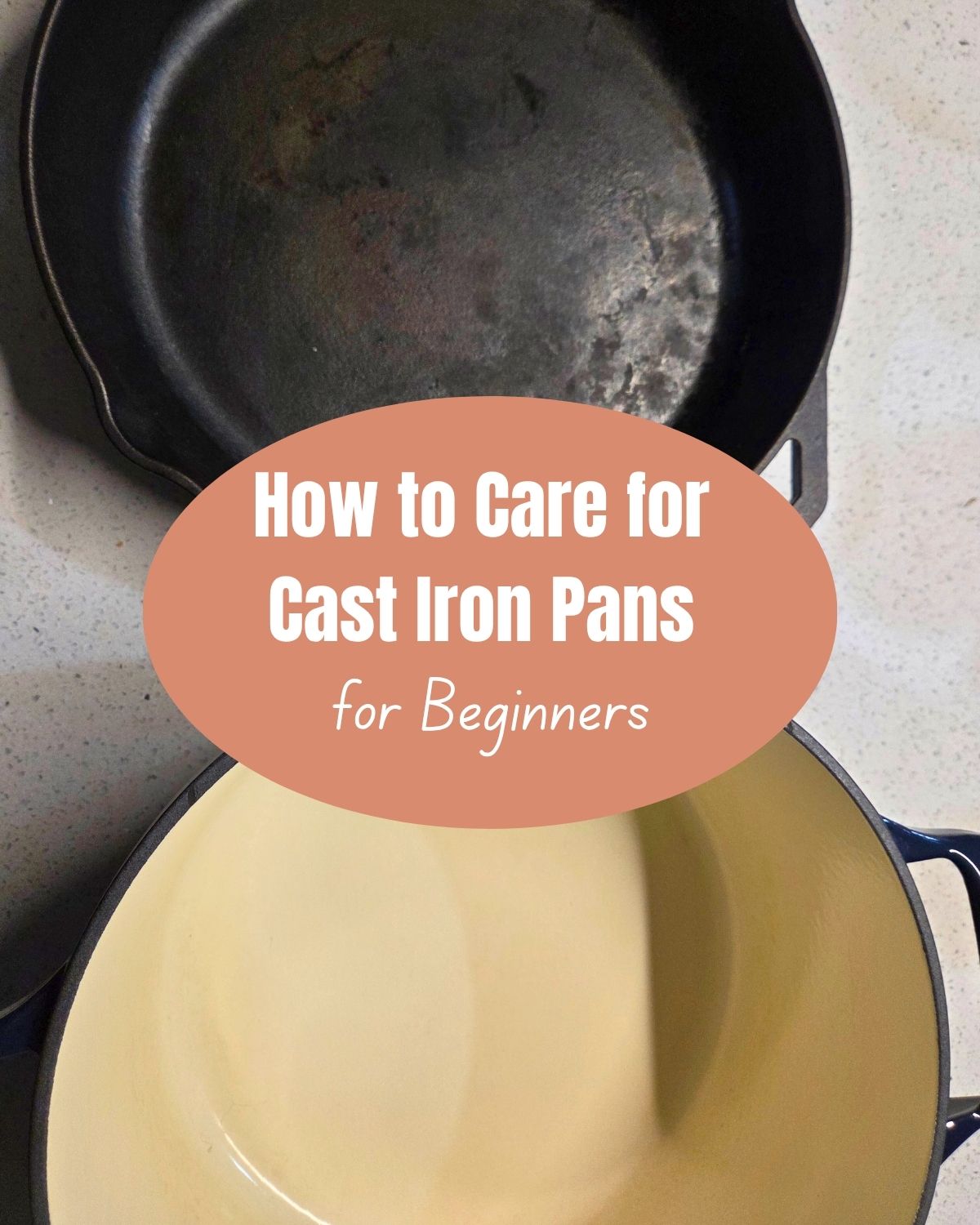
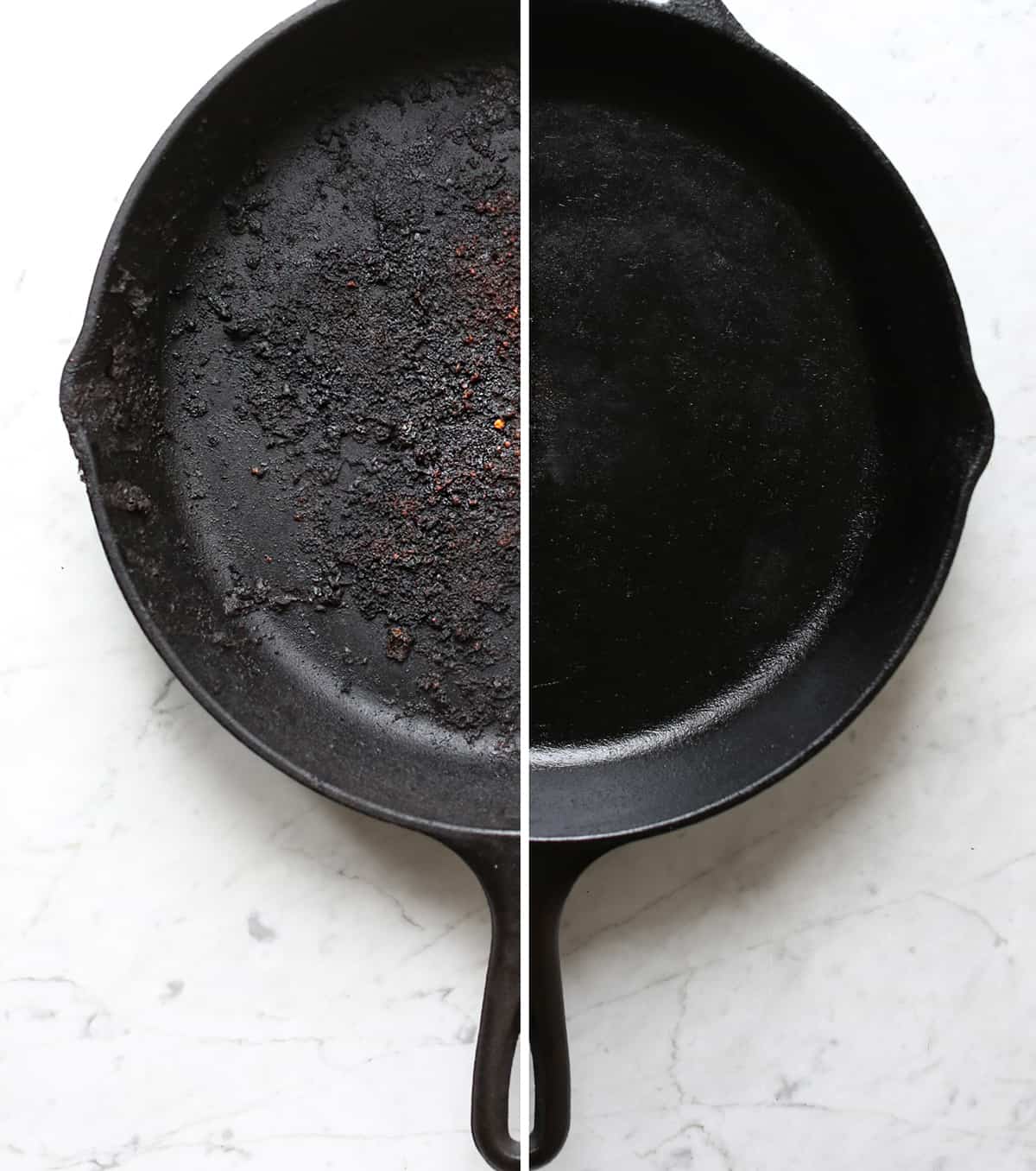
Deep cleaning is occasional. Use it when you have rust, severe sticky residue, or need to reset seasoning.
Oven self-clean or heavy strip (when needed)
- Remove loose rust with a wire brush.
- For rusted pans, soak briefly in equal parts water and white vinegar (max 1 hour). Watch closely; vinegar can damage metal if left too long.
- Rinse and scrub to remove loosened rust.
- Dry immediately and re-season.
Electrolysis or abrasive methods are options for severe rust. These work but require caution. After any heavy cleaning, rebuild seasoning with thin oil coats baked in the oven.
Deep cleaning is a key skill in cast iron cookware care for beginners. Know when to act, and rebuild seasoning after stripping.
Cooking tips to protect seasoning
Small cooking choices protect your pan and improve flavor.
Practical tips
- Heat gradually. Avoid very high heat with an empty pan.
- Use oil or fat liberally for frying and searing.
- Avoid long cooking of highly acidic foods (tomato, vinegar) in a newly seasoned pan. Acid can eat seasoning until it’s well-established.
- Use wooden, silicone, or metal utensils if the cookware has well-bonded seasoning.
I roast tomatoes in well-seasoned pans, but I waited months before doing so on a new pan. That patience prevents damage and is a smart part of cast iron cookware care for beginners.
Storage and long-term maintenance
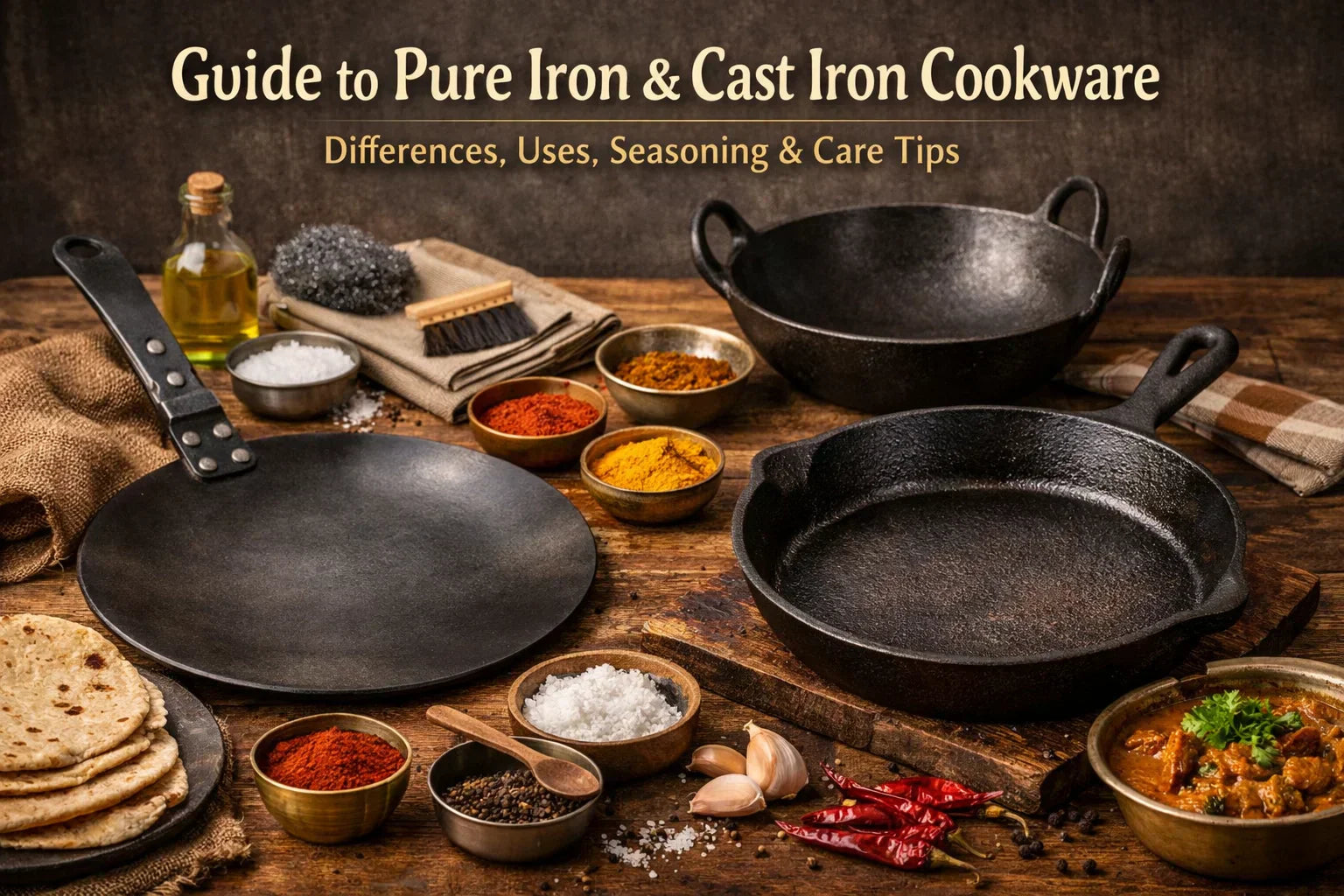
How you store cast iron affects its lifespan. Keep pans dry and ventilated.
Storage tips
- Dry thoroughly before storing.
- Stack pans with paper towels or cloth between them to absorb moisture.
- Apply a thin layer of oil if you won’t use the pan for weeks.
- Keep handles and lids dry to prevent trapped moisture.
Long-term maintenance includes occasional re-seasoning and checking for rust. This simple care preserves the value and performance of your cookware.

Common mistakes to avoid
Beginners often make avoidable errors. Fix these early.
Frequent mistakes
- Soaking cast iron in water for hours.
- Using soap aggressively on well-seasoned surfaces.
- Applying thick layers of oil during seasoning.
- Storing wet pans or stacking with no protection.
- Cooking very acidic foods before seasoning is established.
I once ruined a pan by using a thick layer of oil and skipping the oven time. The result was sticky and hard to fix. Learn from that: thin coats and proper baking are essential for cast iron cookware care for beginners.
Quick PAA-style questions
What is the easiest way to clean a cast iron pan?
A quick rinse with hot water, scrub with a brush or salt, dry thoroughly, and rub with a little oil.
How often should I re-season my cast iron?
Lightly oil after each use. Re-season in the oven when food starts to stick or the surface looks dull.
Can I put cast iron in the dishwasher?
No. Dishwashing removes seasoning and causes rust. Hand-clean only to protect the pan.
Frequently Asked Questions of cast iron cookware care for beginners
How do I start seasoning a new cast iron pan?
Wash the pan with hot water and mild soap to remove factory oils. Dry it, apply a thin coat of oil, and bake upside down at 400–500°F for one hour. Repeat 2–3 times for best results.
Is soap bad for cast iron?
Mild soap used occasionally is fine for seasoned cast iron. Avoid strong dish soap and long soaks. Always dry and oil after washing.
How do I remove rust from my skillet?
Scrub loose rust with a wire brush or steel wool. Use a short vinegar soak for stubborn rust, then rinse, dry, and re-season immediately.
Can I cook acidic foods in cast iron?
You can, but wait until the seasoning is well-developed. Acidic foods can strip new seasoning and may taste metallic in a poorly seasoned pan.
How do I store cast iron to prevent rust?
Dry the pan fully, apply a thin oil layer, and store in a dry place. Place a paper towel between stacked pans to absorb moisture.
Conclusion
Cast iron cookware care for beginners is simple when you learn the core habits: season correctly, clean gently, dry thoroughly, and oil lightly. Small, consistent steps prevent most problems and let your pan improve with time. Start with the basics today: season your pan, follow easy cleaning rules, and you’ll enjoy a lifetime of cooking with a pan that grows better with use. Try one tip from this guide on your next cook and share your results or questions below.